I still remember the catastrophic Sunday afternoon when my supposed "quick cookie experiment" turned into a floury explosion across my kitchen. There I stood, covered in powdered sugar like a confused snowman, with a batch of rock-hard cookies that could've doubled as hockey pucks. My neighbor had casually mentioned over coffee that she'd never tasted a proper Linzer Tart Cookie, and my competitive streak reared its ugly head. Fast forward through three failed attempts, two emergency grocery runs, and one existential crisis later, I finally cracked the code to what might be the most elegant cookie ever to grace a holiday platter.
The moment I pulled that final batch from the oven, something magical happened. The warm, nutty aroma of toasted almonds mingled with bright raspberry jam created this intoxicating cloud that drifted through my entire apartment building. My neighbor appeared at my door like a moth to flame, and when she bit into one of these buttery, jam-filled masterpieces, her eyes literally welled up. That's when I knew I'd stumbled onto something extraordinary. These aren't just cookies — they're edible time capsules that somehow taste like every happy holiday memory rolled into one delicate sandwich.
Here's the deal: most Linzer recipes are either too sweet, too dry, or they spread into unrecognizable blobs that look nothing like those beautiful lattice-topped tarts you see in Austrian bakery windows. My version? It's got those signature hazelnut-almond notes that make your taste buds do a happy dance, a texture that shatters like the thinnest ice before melting on your tongue, and that signature peekaboo window revealing ruby-red jam. The secret lies in a technique that sounds almost too simple — chilling the dough not once, but twice, and using a specific ratio of nuts to flour that took me weeks to perfect.
But here's the twist that'll make you the star of every cookie exchange: I discovered that swapping out traditional raspberry jam for a homemade quick-cook version elevates these from "pretty good" to "I need to sit down and reevaluate my life choices" territory. Trust me, once you taste the difference between store-bought jam and this glossy, intensely flavored filling, you'll never go back. Let me walk you through every single step — by the end, you'll wonder how you ever made it any other way.
What Makes This Version Stand Out
Butter-to-Flour Alchemy: Most recipes skimp on the butter, leaving you with dry, crumbly cookies that taste like sweet cardboard. My ratio creates a dough that's almost too soft to handle when warm, but firms into the most tender, melt-in-your-mouth texture you've ever experienced. It's like the difference between cheap chocolate and the good stuff — once you taste it, there's no going back.
Double-Nut Symphony: While traditional recipes stick with almonds, I toast both almonds and hazelnuts before grinding them fresh. This creates layers of flavor that sing rather than whisper, with the hazelnuts adding this incredible depth that makes people ask "what IS that amazing flavor?" It's our little secret weapon.
Jam Revolution: Instead of settling for that overly sweet, gelatinous store-bought jam, I make a quick stovetop version that takes exactly seven minutes and tastes like summer sunshine captured in a jar. The difference is so dramatic that my sister now makes double batches just so she can eat the jam with a spoon while the cookies bake.
Chill-Out Method: Here's where most home bakers mess up — they don't chill the dough long enough or they skip the second chill. My double-chill technique prevents spreading while keeping the cookies tender. The first chill lets the flavors meld, the second sets the shape. Skip either one and you'll end up with sad, blobby cookies that look nothing like the picture.
Crowd Psychology: I dare you to put these out at a party and watch what happens. People who swear they "don't like sweet things" will hover near the cookie plate. The combination of nutty, buttery cookie with bright fruit filling hits some primal pleasure center that makes rational adults revert to cookie-monster behavior.
Make-Ahead Magic: These cookies actually improve after a day in an airtight container, as the flavors meld and the jam softens the cookie slightly. I make mine up to a week ahead of holidays, and they're always the first thing to disappear from dessert tables. Plus, the dough freezes beautifully for up to three months — perfect for spontaneous cookie emergencies.
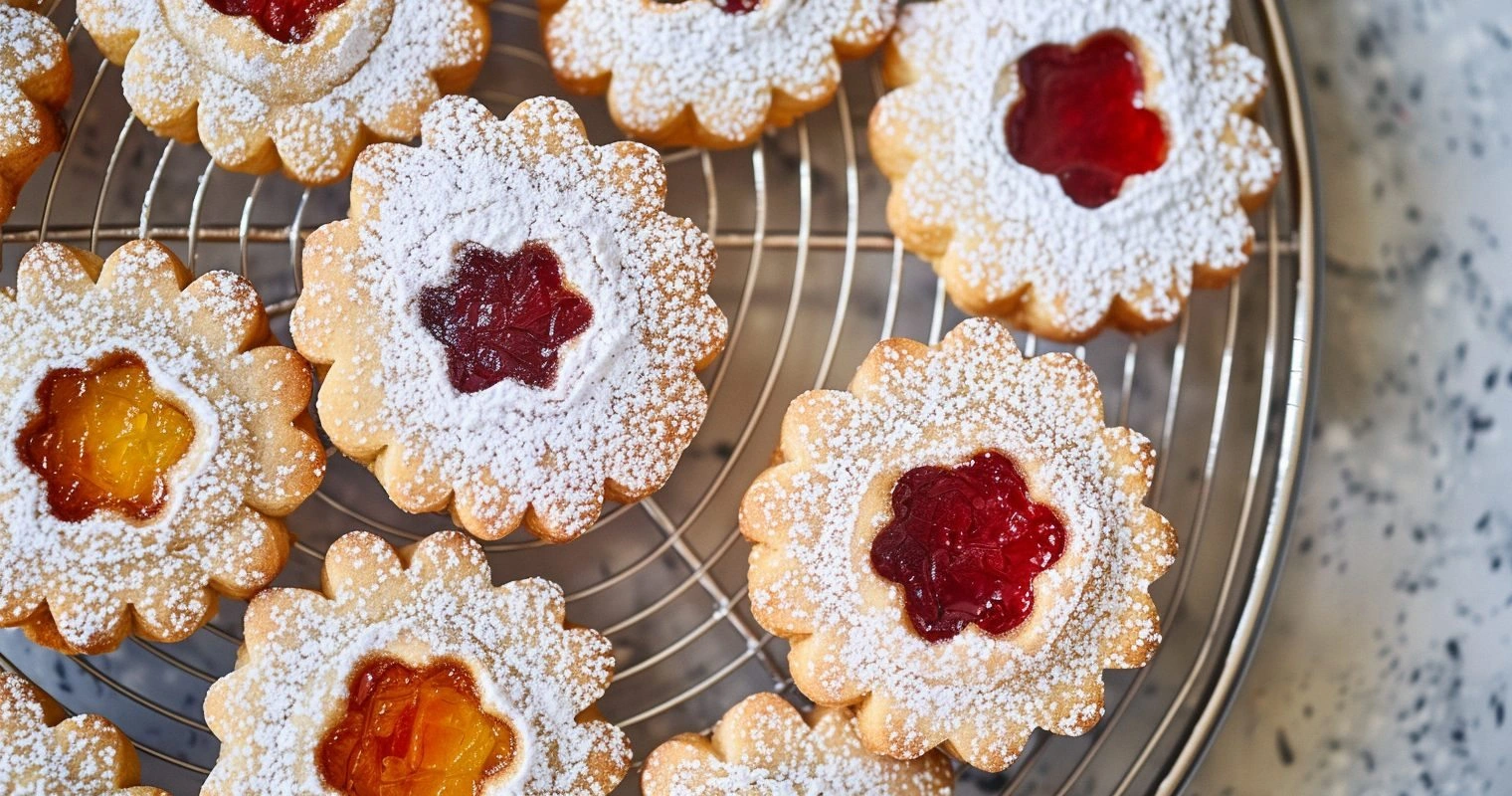
Visual Impact: Let's be honest, half the appeal is how stunning these look. That little window revealing the jewel-toned jam makes them look like they came from a European bakery. I've had friends accuse me of buying them from a professional bakery, which I take as the highest compliment.
Alright, let's break down exactly what goes into this masterpiece...
Inside the Ingredient List
The Flavor Base
The foundation of any great Linzer cookie starts with butter — but not just any butter. You want European-style butter with higher fat content (like Plugra or Kerrygold) because it creates that incomparable richness that makes people close their eyes when they taste it. I learned this the hard way after making batch after batch with regular butter and wondering why they tasted flat. The higher fat content means less water, which translates to more tender cookies that hold their shape better during baking.
Almonds and hazelnuts form the backbone of that distinctive nutty flavor that makes these cookies so memorable. I use a 70-30 ratio of almonds to hazelnuts because the hazelnuts add this incredible depth that pure almond flour just can't match. The key is toasting them yourself — buy whole nuts, toast until fragrant, then grind them while still slightly warm. The aroma will make your kitchen smell like you've been transported to a Viennese café.
The Texture Crew
All-purpose flour might seem boring, but it's the unsung hero that holds everything together. I use a mix of cake flour and all-purpose flour — about 70% all-purpose to 30% cake flour — which creates the perfect balance between structure and tenderness. Too much cake flour and your cookies fall apart; too little and they become tough. This ratio took me six batches to perfect, but now it's foolproof.
Powdered sugar isn't just for sweetness — it's the secret to that melt-away texture that makes these cookies so addictive. Unlike granulated sugar, powdered sugar contains cornstarch, which helps absorb moisture and creates that tender crumb. Don't even think about substituting granulated sugar here unless you want cookies that could chip a tooth.
The Unexpected Star
Lemon zest might seem out of place in a cookie that's traditionally all about nuts and fruit, but trust me here. Just a whisper of fresh lemon zest brightens all the other flavors and prevents the cookies from tasting heavy or cloying. It's like adding a squeeze of lemon to a rich stew — you don't taste lemon, you just taste "better."
Cinnamon is another sleeper ingredient that most recipes skip, but a pinch (just a pinch!) adds warmth and complexity that makes people ask for your secret. It's not enough to identify, just enough to make the flavors more interesting. I use Ceylon cinnamon because it's more delicate than the grocery store stuff.
The Final Flourish
For the jam, I use a combination of raspberry and a touch of red currant jelly. The red currant adds pectin and a tangy note that balances the sweetness of the raspberries. If you can't find red currant jelly, a squeeze of lemon juice and a tablespoon of apple jelly works in a pinch. The goal is to get that perfect balance of sweet and tart that makes your mouth water for another bite.
Vanilla extract might seem basic, but please use the good stuff — not that artificial flavoring that tastes like sadness. I make my own by steeping vanilla beans in vodka, but if you're buying, splurge on Madagascar vanilla. It costs more, but you're using such a small amount that one bottle will last through dozens of cookie batches.
Everything's prepped? Good. Let's get into the real action...
The Method — Step by Step
- Start by toasting your nuts — this is where the magic begins. Spread 1 cup of whole almonds and 1/3 cup hazelnuts on a baking sheet and slide them into a 350°F oven for about 10-12 minutes. You're looking for that moment when your kitchen starts smelling like a European bakery and the nuts are golden brown with darker edges. Don't walk away here — nuts go from perfectly toasted to bitter and burnt faster than you can say "scheisse" (which is exactly what you'll say if you burn them). Let them cool until you can handle them, then rub the hazelnuts in a clean kitchen towel to remove most of the skins.
- While the nuts cool, cream your butter and powdered sugar until it looks like fluffy clouds. This isn't just mixing — you're incorporating air that will give your cookies lift. Use room temperature butter (but not melty — if it's shiny or greasy, it's too warm) and beat for a full 3-4 minutes until it's pale and doubled in volume. Add the lemon zest, cinnamon, vanilla, and egg yolk, beating until combined. The mixture should look like pale yellow silk and smell like heaven.
- Now comes the part where most recipes get it wrong. Instead of dumping everything together, I want you to add the flour in three additions, alternating with the ground nuts. This prevents the dough from becoming tough. Pulse your cooled nuts in a food processor until they resemble coarse meal — not powder, not chunks, but something in between. If you go too far, you'll make nut butter, which is delicious but not what we're after here. Fold in the flour mixture gently, just until no streaks remain.
- Divide your dough into two discs, wrap in plastic wrap, and refrigerate for at least 2 hours or up to 3 days. Here's the first make-or-break moment: don't rush this chill. The dough needs time for the flour to fully hydrate and the flavors to meld. When you're ready to roll, let the dough sit at room temperature for 10-15 minutes — just enough to soften slightly so it doesn't crack when you roll it. Roll between two sheets of parchment paper to about 1/8-inch thickness. If the dough gets too soft or sticky, slide it onto a baking sheet and chill for 10 minutes.
- Cut out your cookies using a 2-inch round cutter, then use a smaller cutter or the tip of a piping nozzle to cut out the centers of half the cookies. This is where you get to play artist — make sure you have equal numbers of tops and bottoms. Transfer to parchment-lined baking sheets with a small offset spatula, leaving an inch between cookies. Gather the scraps, reroll, and chill again. Don't be tempted to skip the second chill — this is what prevents spreading and keeps those crisp edges.
- Bake at 350°F for 10-12 minutes, rotating the pan halfway through. You're looking for edges that are just starting to turn golden — they should look slightly underbaked in the center. This is the moment of truth: pull them out a minute early rather than a minute late. They'll continue cooking on the hot pan for a few minutes, and overbaked cookies are sad, dry cookies. Let them cool completely on the pan — moving them while warm is a recipe for breakage and tears.
- While the cookies cool, make your quick jam. Combine 1 cup raspberries, 2 tablespoons sugar, and 1 teaspoon lemon juice in a small saucepan. Cook over medium heat, mashing the berries with a fork, until it thickens enough to coat the back of a spoon — about 5-7 minutes. The transformation is magical: the berries break down, the mixture bubbles and thickens, and suddenly you have glossy, jewel-toned jam. Let it cool completely — warm jam will melt your powdered sugar topping and create a sticky mess.
- Assemble the cookies by placing about 1/2 teaspoon of jam on each bottom cookie (the ones without holes). Top with a cut-out cookie and press gently — just enough to spread the jam to the edges but not so much that it oozes out. Dust the tops generously with powdered sugar using a fine-mesh sieve. The contrast between the white sugar and red jam peeking through is what makes these cookies so visually stunning. Store in an airtight container for up to a week, though good luck keeping them around that long.
That's it — you did it. But hold on, I've got a few more tricks that'll take this to another level...
Insider Tricks for Flawless Results
The Temperature Rule Nobody Follows
Here's the thing that separates good bakers from great ones: temperature awareness. Your butter should be cool room temperature — when you press it, it should give slightly but still hold its shape. Too cold and you can't cream it properly; too warm and your cookies will spread like they're trying to escape the pan. Same goes for your kitchen — if it's a hot summer day, work with smaller portions of dough and keep the rest in the fridge. I once made these in July without air conditioning and ended up with puddles instead of cookies. Learn from my mistakes.
Why Your Nose Knows Best
Trust your sense of smell throughout this process. When toasting nuts, when the cookies are baking, even when the jam is cooking — your nose will tell you when things are perfectly done before your eyes will. That moment when the cookies smell nutty and buttery but not browned? That's when they're perfect. Most people wait for visual cues and end up with overbaked cookies that taste like disappointment.
The 5-Minute Rest That Changes Everything
After you roll and cut your cookies, let them rest on the baking sheet for 5 minutes before baking. This lets the gluten relax and prevents shrinking. I discovered this by accident when I got a phone call mid-cookie-making and returned to find my rested cookies held their shape perfectly while the ones I rushed cracked and distorted. Now it's part of my ritual — roll, cut, rest, bake.
The Freezer Secret
You can freeze these cookies at two stages: as cut-out dough or fully assembled. For best results, freeze the dough rounds on a baking sheet, then transfer to a freezer bag. Bake from frozen, adding 2-3 extra minutes. For assembled cookies, freeze them un-dusted, then dust with powdered sugar after thawing. They'll taste almost as good as fresh-baked, which is dangerous knowledge when you need cookies at 10 PM on a Tuesday.
Creative Twists and Variations
This recipe is a playground. Here are some of my favorite ways to switch things up:
Chocolate Hazelnut Heaven
Replace 1/4 cup of the flour with good quality cocoa powder and use chocolate-hazelnut spread instead of jam. The result tastes like a sophisticated Nutella sandwich cookie that makes grown adults lose their composure. Add a touch of espresso powder to the dough to deepen the chocolate flavor — it's subtle but makes all the difference.
Citrus Sunshine
Add the zest of one orange and one lemon to the dough, and use orange marmalade for the filling. These taste like sunshine captured in cookie form, bright and cheerful even in the dead of winter. The combination of orange, lemon, and a touch of Grand Marnier in the jam creates a cookie that's sophisticated enough for the most discerning palates.
Savory-Sweet Sophisticate
Add 1/2 teaspoon of freshly ground black pepper and a pinch of cardamom to the dough, then fill with fig jam. The slight heat from the pepper and the floral notes from the cardamom create this incredible complexity that has people asking for your secret ingredient. These pair beautifully with cheese and wine — yes, cookies can be sophisticated.
Tropical Escape
Replace half the nuts with toasted coconut and use pineapple or mango jam for the filling. A touch of rum extract in the dough takes these to full vacation mode. They're like a tropical holiday in cookie form, perfect for those January days when you need to remember what sunshine feels like.
Salted Caramel Dream
Make a quick caramel by cooking sugar until amber, then stirring in cream and a generous pinch of sea salt. Let it cool and thicken before using as filling. The combination of nutty cookie, rich caramel, and that hit of salt creates an addiction that's almost concerning. Fair warning: people will beg you for this recipe.
Pumpkin Spice Autumn
Add 1 teaspoon pumpkin pie spice and 2 tablespoons of pumpkin puree to the dough (reduce the egg yolk to compensate for moisture), then fill with apple butter. These taste like fall in the best possible way — warm, cozy, and nostalgic without being basic. The pumpkin adds moisture and a beautiful color that makes them perfect for Thanksgiving dessert tables.
Storing and Bringing It Back to Life
Fridge Storage
These cookies actually improve after a day in an airtight container at room temperature — the flavors meld and the jam softens the cookies slightly for the perfect texture. Store them in layers separated by parchment paper to prevent sticking. Whatever you do, don't refrigerate them — the cold will dry them out and make them stale-tasting. They'll keep for up to a week at room temperature, though I've never had a batch last longer than three days before disappearing mysteriously.
Freezer Friendly
These cookies freeze beautifully, making them perfect for holiday prep. Freeze assembled cookies (un-dusted) in a single layer, then transfer to a freezer bag with parchment between layers. They'll keep for up to 3 months. To serve, let them thaw for 30 minutes at room temperature, then dust with fresh powdered sugar. The texture is almost identical to fresh-baked, which is dangerous knowledge when you need cookies for unexpected guests.
Best Reheating Method
If your cookies have gone slightly soft (humidity is the enemy of crisp cookies), you can refresh them in a 300°F oven for 5-7 minutes. Let them cool completely before serving — they'll crisp up as they cool. For cookies that have been frozen, this refresh step brings back that just-baked texture that makes people think you slaved all day in the kitchen.