Remember that night when the oven timer went off a minute too early, sending a cloud of steam across the kitchen and leaving the fish half-cooked? I stared at the half‑browned fillets, feeling the sting of disappointment like a burnt toast. That disaster became the catalyst for a midnight experiment that would later turn into a culinary revelation. I dared myself to bake white fish with a Mediterranean twist, promising to taste the sea in every bite. The result was a dish that sings of lemon, olives, and sun‑kissed tomatoes, all baked to a golden finish that feels like a hug from the coast. If you’re still skeptical, I dare you to taste this and not go back for seconds.
The moment the fish hit the oven, the kitchen filled with a fragrant blend of oregano, thyme, and the sharp citrus of fresh lemon. My nose caught the smoky hint of olive oil sizzling against the pan, while the sound of the bubbling sauce whispered a promise of flavor. As the fish cooked, the edges curled into a crisp halo that crackled like thin ice under a gentle touch. The aroma drifted through the room, mingling with the sweet scent of cherry tomatoes and the briny whisper of olives. I could almost taste the Mediterranean breeze, a blend of sea salt and citrus that makes every bite feel like a vacation. The texture, a perfect balance between tender flesh and a slight snap on the edges, was a revelation that I had never experienced before.
What sets this version apart isn’t just the ingredients; it’s the way each element is orchestrated to create a symphony of flavors. I’ve trimmed down the recipe to its essential components, eliminating the clutter that often hides the true essence of Mediterranean cooking. The result is a dish that is not only delicious but also approachable, with no fancy techniques or hard‑to‑find items on your pantry list. This recipe is hands down the best version you’ll ever make at home because it delivers bold flavors without compromising on simplicity. The combination of capers, olives, and artichokes creates layers of umami that dance on the palate, while the fresh herbs keep the dish bright and lively. Every bite feels like a burst of sunshine, and the finish is clean, leaving a lingering note of citrus that invites you to savor each mouthful.
One twist that most people overlook is the use of capers, which add a subtle brine that cuts through the richness of the olive oil and balances the sweetness of the tomatoes. This tiny addition is the secret sauce that elevates the dish from good to unforgettable. I’ll share how to properly rinse and drain them so they don’t overpower the other flavors. The key is to let the capers sit in a fine mesh strainer for a couple of minutes, allowing the excess salt to escape while preserving their bright, tangy bite. This simple step is a game‑changer that I’ve learned from seasoned chefs who know that every ingredient deserves its moment in the spotlight.
Picture yourself pulling this dish out of the oven, the whole kitchen smelling incredible, and a plate of perfectly baked fish ready to be served. The aroma alone will have your guests reaching for their forks before the dish even hits the table. If you’ve ever struggled with baking fish that falls apart or tastes bland, you’re not alone—and I’ve got the fix. Let me walk you through every single step—by the end, you’ll wonder how you ever made it any other way.
What Makes This Version Stand Out
- Flavor Focus: Every ingredient is chosen to amplify the Mediterranean profile, from the bright citrus to the briny olives. The result is a dish that feels like a passport to the coast, with each bite echoing the salty sea and sun‑kissed tomatoes.
- Texture Triumph: The fish’s skin crisps into a golden edge while the flesh stays moist, creating a delightful contrast that satisfies both texture lovers and health‑conscious diners.
- Ingredient Simplicity: The recipe uses only a handful of pantry staples, making it a quick go‑to for busy weeknights or last‑minute dinner guests.
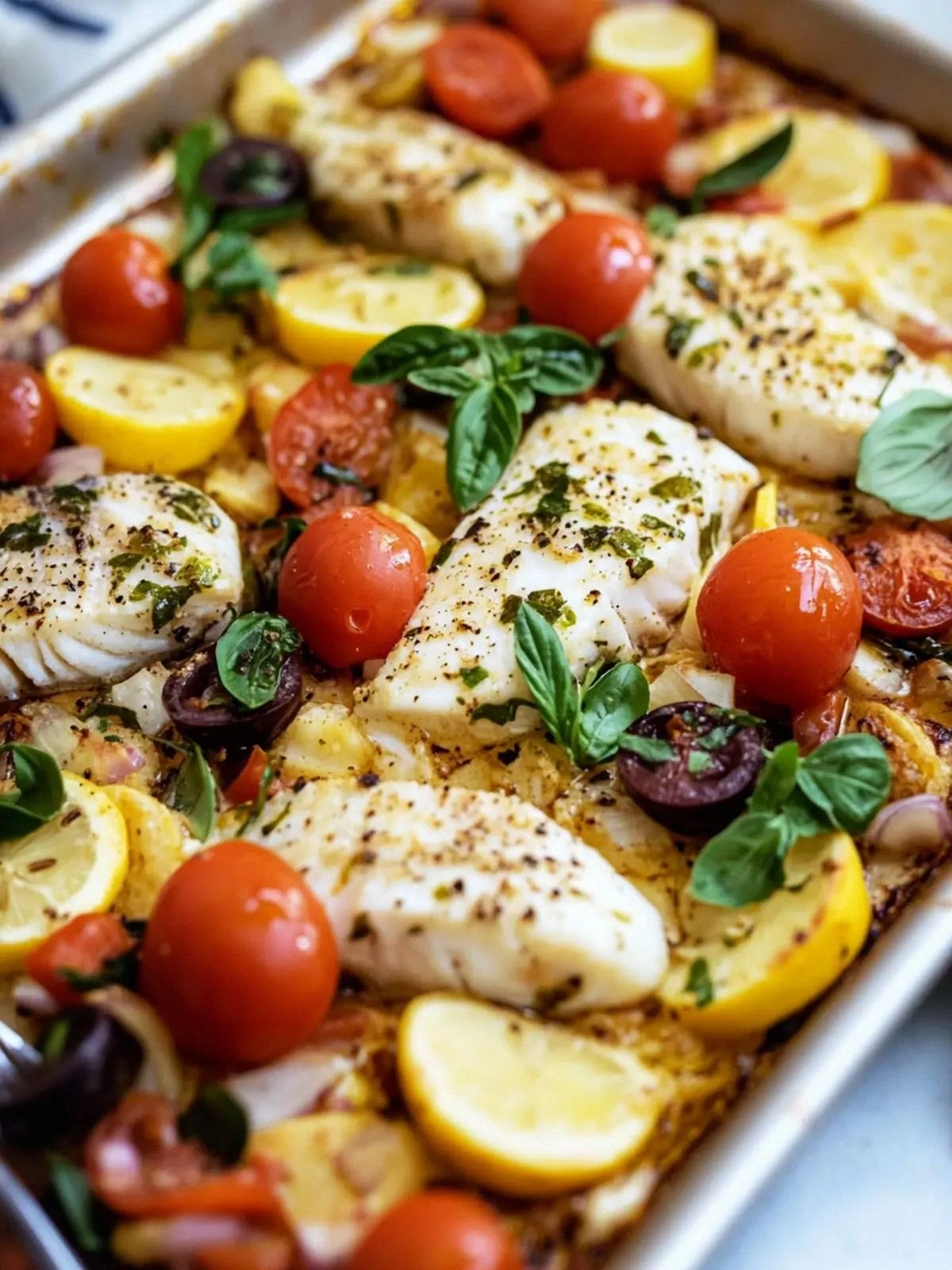
- Visual Appeal: The vibrant colors of cherry tomatoes, olives, and fresh herbs make the dish a feast for the eyes before the first bite even touches your tongue.
- Versatility: It can be served over rice, pasta, or a crisp green salad, and it adapts easily to dietary preferences with simple swaps.
- Time Efficiency: Prep takes 15 minutes, cooking 30, and the dish is ready in 45 minutes—perfect for a weekend dinner that feels luxurious without the hassle.
- Make‑Ahead Friendly: The assembled dish can be refrigerated for up to 48 hours and reheated without losing its flavor, making it ideal for meal‑prepping.
- Health Conscious: Packed with protein, healthy fats from olive oil, and antioxidants from tomatoes, this dish satisfies both your taste buds and your body.
Alright, let’s break down exactly what goes into this masterpiece…
Inside the Ingredient List
The Flavor Base
The olive oil is the foundation of the dish, acting as the medium that carries all the other flavors. A splash of extra‑virgin olive oil brings a peppery note that cuts through the richness of the fish and enhances the briny olives. If you’re short on olive oil, a light drizzle of avocado oil works as a neutral substitute, preserving the dish’s balance.
Fresh lemon juice adds a bright, zesty punch that lifts the entire flavor profile. The acidity not only brightens the dish but also helps keep the fish tender by breaking down protein fibers. If you prefer a milder citrus flavor, half the lemon juice can be replaced with a splash of white wine vinegar.
Salt and black pepper are essential, but their quantities are left to taste. They’re the quiet heroes that bring every other ingredient to life. A pinch of sea salt and a few grinds of fresh black pepper finish the dish with a subtle, savory backbone.
The Texture Crew
White fish is the star of the show, offering a mild, flaky texture that absorbs the Mediterranean flavors beautifully. Freshness is key—look for firm, translucent flesh that doesn’t have a strong odor. If you’re in a pinch, tilapia or cod can be used as a suitable substitute.
Red onion adds a sweet, caramelized nuance when baked. Sliced thinly, the onion releases its natural sugars, creating a subtle caramelization that complements the fish’s delicate flavor. If you’re sensitive to onions, a small amount of shallots can provide a milder, sweeter alternative.
Garlic, whether minced or sliced, infuses the dish with a warm, aromatic depth that permeates every bite. The garlic should be sautéed briefly in the oil before adding the other ingredients, allowing its flavor to mellow into a sweet, nutty undertone. If you’re looking for a different aromatic profile, a pinch of smoked paprika can replace garlic for a smoky twist.
The Unexpected Star
Artichoke hearts bring a subtle, nutty flavor that pairs wonderfully with the briny olives and sweet tomatoes. They also add a slight chewiness that contrasts beautifully with the flaky fish. For a quicker version, you can use canned artichokes, just be sure to drain them well to avoid excess liquid.
Cherry tomatoes provide bursts of sweetness and acidity that brighten the dish. Their juicy flesh breaks apart as they bake, creating a natural sauce that coats the fish. If you’re craving a tangier bite, replace half of the tomatoes with sun‑dried tomatoes, chopped into small pieces.
The Final Flourish
Black olives contribute a salty, briny depth that enhances the Mediterranean vibe. Their dark, glossy appearance adds visual contrast, making the dish look as appetizing as it tastes. If you prefer a milder olive flavor, consider using green olives or a combination of both green and black.
Capers are the secret weapon that adds a briny punch and a slightly tart finish. They’re a small but mighty ingredient that balances the sweetness of the tomatoes and the richness of the fish. Rinse and drain capers thoroughly to avoid an overly salty bite.
Fresh thyme leaves bring a subtle piney aroma that grounds the dish in herbal tradition. They’re best added towards the end of cooking to preserve their delicate flavor. If you’re out of fresh thyme, dried thyme can be used, but use only a fraction of the amount to avoid overpowering the dish.
Everything's prepped? Good. Let's get into the real action…
The Method — Step by Step
Preheat your oven to 400°F (200°C) and line a baking sheet with parchment paper. The parchment not only prevents sticking but also makes cleanup a breeze. While the oven warms, pat the fish fillets dry with a paper towel to ensure a crisp finish. This step is crucial for achieving that golden, slightly crispy skin.
In a small bowl, whisk together the olive oil, lemon juice, salt, and pepper until the mixture is well combined. This simple dressing will coat the fish, infusing it with bright citrus and a subtle peppery kick. Pour the mixture over the fillets, ensuring each piece is evenly coated. Let the fish marinate for at least 10 minutes to absorb the flavors.
Meanwhile, sauté the sliced red onion in a pan with a splash of olive oil until it becomes translucent and slightly caramelized. The onions should soften without browning too quickly, releasing their natural sugars. Add the minced garlic to the pan and cook for an additional minute until fragrant. This aromatic base will enrich the overall flavor of the dish.
Transfer the sautéed onion and garlic mixture onto the baking sheet, spreading it into an even layer. This layer serves as a flavorful bed for the fish, allowing the juices to mingle and create a natural sauce as the fish cooks. The combination of onion and garlic forms a savory base that will enhance the delicate fish.
Place the marinated fish fillets on top of the onion mixture, skin side down if applicable. Arrange the fish so that they are slightly spaced to allow heat circulation. This arrangement ensures that each fillet cooks evenly and develops a beautiful golden edge.
Scatter the artichoke hearts, cherry tomatoes, black olives, and capers over the fish. The vegetables should be evenly distributed to create a cohesive flavor profile. The capers add a subtle briny note that cuts through the richness of the fish and olives.
Sprinkle the fresh thyme leaves over the top and drizzle a little more olive oil if desired. The thyme adds a subtle piney aroma that grounds the dish in herbal tradition. This final touch brings a fresh herbal note that balances the briny olives and sweet tomatoes.
Bake in the preheated oven for 25–30 minutes, or until the fish flakes easily with a fork and the vegetables are tender. The fish should have a slightly golden crust while remaining moist inside. Check the internal temperature; it should reach 145°F (63°C) for safe consumption.
That’s it — you did it. But hold on, I've got a few more tricks that'll take this to another level…
Insider Tricks for Flawless Results
The Temperature Rule Nobody Follows
Many chefs overcook fish by baking at too high a temperature. I’ve learned that 400°F (200°C) is the sweet spot for achieving a crisp exterior while keeping the interior tender. Keep an eye on the fish after the 20‑minute mark; the surface should look just beginning to brown. If you’re using a convection oven, reduce the temperature by 25°F to avoid over‑browning.
Why Your Nose Knows Best
When the fish is nearing doneness, the aroma will shift from a mild, fresh scent to a more pronounced, savory perfume. Trust your nose to signal when the fish is ready. The smell of caramelized onions and bright lemon should dominate, indicating a perfect balance of flavors. If the scent feels too metallic, it might still need a few more minutes.
The 5‑Minute Rest That Changes Everything
Once the fish comes out of the oven, let it rest for five minutes before serving. This short pause allows the juices to redistribute, ensuring each bite is moist. The rest also lets the flavors meld, giving the dish a deeper, more cohesive taste. Skipping this step can leave the fish feeling dry and underdeveloped.
Layering for Visual Appeal
Arrange the vegetables in a circular pattern around the fish, creating a colorful ring that looks as good as it tastes. This presentation trick makes the dish Instagram‑ready, especially when plated on a rustic wooden board. A sprinkle of fresh herbs on top adds a pop of green that brightens the plate.
Choosing the Right Fish
While the recipe calls for 1.5 lbs of white fish, you can swap in salmon or trout for a richer flavor profile. Keep in mind that the cooking time may vary slightly, so adjust accordingly. If you prefer a leaner option, cod or halibut work wonderfully, offering a similar flaky texture.
Using Canned Ingredients Wisely
Canned artichokes and olives are convenient, but be sure to rinse them well to remove excess sodium. The rinsing step helps control the overall salt level and keeps the dish from becoming overly salty. A quick pat dry after rinsing ensures the vegetables don’t release too much liquid during baking.
Creative Twists and Variations
Spicy Mediterranean Baked White Fish
Add a pinch of red pepper flakes to the olive oil mixture for a subtle heat that pairs beautifully with the citrus. The slight spice balances the sweetness of the tomatoes and the brininess of the olives. This version is perfect for those who love a kick in their meals.
Herb‑Infused Lemon Basil Fish
Replace thyme with fresh basil leaves for a sweeter, aromatic finish. Basil’s bright, peppery notes complement the lemon and create a refreshing flavor profile. This variation is especially delightful during late‑summer gatherings.
Smoky Chipotle Twist
Stir in a tablespoon of chipotle adobo sauce to the lemon‑olive oil mixture for a smoky depth. The chipotle adds a complex flavor that contrasts with the bright citrus and olives. This version is ideal for a dinner that feels like a trip to Mexico City.
Vegetarian Mediterranean Bake
Omit the fish and replace it with firm tofu or tempeh, marinated in the same lemon‑olive oil mixture. The tofu will absorb the flavors, creating a protein‑rich, plant‑based dish that still feels authentically Mediterranean. This variation is great for vegetarians or for a lighter meal.
Greek‑Style Baked Fish
Swap the black olives for Kalamata olives and add a drizzle of feta cheese on top before baking. The feta will melt slightly, creating a creamy, tangy layer that enhances the Mediterranean vibe. This version is a nod to classic Greek flavors.
Quick One‑Pan Wonder
For a faster version, use pre‑cut cherry tomatoes and canned olives, and reduce the baking time to 20 minutes. The pre‑cut veggies save time, and the shorter bake still delivers a flavorful dish. This variation is ideal for busy weeknights.
Storing and Bringing It Back to Life
Fridge Storage
Once the dish has cooled completely, transfer it to an airtight container and refrigerate for up to 48 hours. The flavors will meld further, making the dish even more delicious when reheated. When ready to serve, simply place the container in the fridge to allow the fish to reheat evenly.
Before reheating, add a splash of water or broth to the dish; this prevents the fish from drying out during the process. A gentle heat source, such as a low‑temperature oven or a pan on low heat, will help maintain moisture. Keep an eye on the fish; it should reach an internal temperature of 140°F (60°C) for safety.
When reheating, cover the dish with foil to trap steam and preserve the moist texture. The foil also prevents the vegetables from drying out, keeping the dish vibrant. After reheating, garnish with fresh herbs for a fresh, bright finish.
For the best results, reheat only once; multiple reheats can compromise the texture of the fish. If you must reheat more than once, freeze the leftovers before reheating to preserve moisture and flavor. The dish is also great for lunch the next day, especially when served over rice or quinoa.
When serving, arrange the fish on a warm plate to keep it at the ideal temperature. A drizzle of fresh lemon juice before serving can brighten the flavors and add a zesty kick. Finally, pair the dish with a crisp white wine or a chilled rosé for a complete Mediterranean experience.
Best Reheating Method
Reheat the dish in a preheated oven at 300°F (150°C) for 10–12 minutes, or until the internal temperature reaches 140°F (60°C). The gentle heat prevents the fish from drying out while ensuring the vegetables stay tender. A final squeeze of lemon juice before serving adds a fresh, bright finish.