I still remember the night my roommate dared me to turn a humble butternut squash into something that would make our taste buds do the salsa. The kitchen was a battlefield: a half‑roasted squash, a can of black beans that had seen better days, and a pot that was practically screaming for a chili. I stared at the ingredients, feeling the weight of culinary expectations, and decided then and there that this would be the most unapologetically delicious vegetarian chili anyone would ever taste at home. The moment the squash hit the pan, the sweet, nutty aroma swirled through the air like a fragrant storm, and I knew I was onto something special.
Picture this: a pot simmering, the squash cubes turning translucent, the black beans absorbing every spice, and the tomatoes bubbling into a rich, velvety sauce that coats your spoon like velvet. The sound of the bubbling broth is a gentle lullaby for the kitchen, while the sizzle of onions and garlic on the stove is the soundtrack to a culinary triumph. The first bite is a harmonious dance of sweet squash, smoky paprika, and the subtle heat of chili powder, followed by a burst of earthy beans that linger on the palate. Feel the warmth spread through your chest as you take that first spoonful, and you’ll understand why I’m so obsessed with this dish.
What makes this version stand out? I’ve stripped away the usual clutter and focused on pure, bold flavors. The squash isn’t just sweet; it’s caramelized to a depth of flavor that elevates the entire chili. The black beans are rinsed and drained to keep them silky, not mushy. The spice blend is a carefully balanced orchestra of cumin, smoked paprika, oregano, and chili powder that hits the right notes without overwhelming. And the final touch? A splash of lime juice and a sprinkle of fresh cilantro that give it that bright, fresh finish that makes you want to eat a second bowl, then a third. I dare you to taste this and not go back for seconds.
If you’ve ever struggled to create a vegetarian chili that feels hearty and satisfying, you’re not alone. Many recipes either fall flat or are too heavy, but this one strikes the perfect balance. I’ve tested it on a cold winter night, on a sunny spring afternoon, and even at a backyard barbecue. The result is always the same: a bowl that feels like a hug in a mug, with a texture that’s both comforting and exciting. Let me walk you through every single step — by the end, you’ll wonder how you ever made it any other way.
What Makes This Version Stand Out
- Flavor Depth: The squash caramelizes to a sweet, nutty finish that cuts through the richness of the beans.
- Texture Play: Diced squash and whole beans create a satisfying bite, while the sauce stays silky.
- Spice Harmony: A balanced blend of cumin, smoked paprika, oregano, and chili powder offers depth without overpowering.
- Fresh Finish: A squeeze of lime and a handful of cilantro lift the dish with bright, citrusy notes.
- Make‑Ahead Friendly: The chili tastes even better the next day, making it ideal for meal prep.
- Kid‑Friendly: Mild enough for little taste buds, yet complex enough for adults.
Alright, let’s break down exactly what goes into this masterpiece…
Inside the Ingredient List
The Flavor Base
The foundation of any great chili starts with aromatics. Onion and garlic are sautéed until translucent, releasing a sweet, savory base that anchors every other element. If you’re in a hurry, a tablespoon of onion powder and a pinch of garlic powder will do, but fresh is always better. Skipping this step will leave your chili feeling flat and unbalanced.
The Texture Crew
Butternut squash is the star of the show, providing a sweet, slightly sweet crunch when diced properly. Black beans bring a hearty, creamy texture that absorbs all the spices, creating a satisfying mouthfeel. Rinsed and drained beans keep the chili from becoming too thick or gummy. If you prefer a thicker consistency, add a tablespoon of masa harina or cornmeal; just stir in a little at a time to avoid clumping.
The Unexpected Star
Smoked paprika is the secret weapon that gives this chili its subtle, smoky undertone. It’s the difference between a regular chili and a memorable one. If you’re a fan of heat, add a pinch of cayenne or a splash of hot sauce after the simmer. Without smoked paprika, the dish will taste a bit more like a plain tomato soup.
The Final Flourish
A splash of lime juice at the end brightens the flavors, cutting through the richness. Fresh cilantro adds a herbaceous note that balances the sweetness of the squash. Optional toppings like diced avocado, a dollop of Greek yogurt, or shredded cheddar create layers of texture and flavor. If you’re vegan, replace the dairy with coconut cream or a plant‑based yogurt.
Everything’s prepped? Good. Let’s get into the real action…
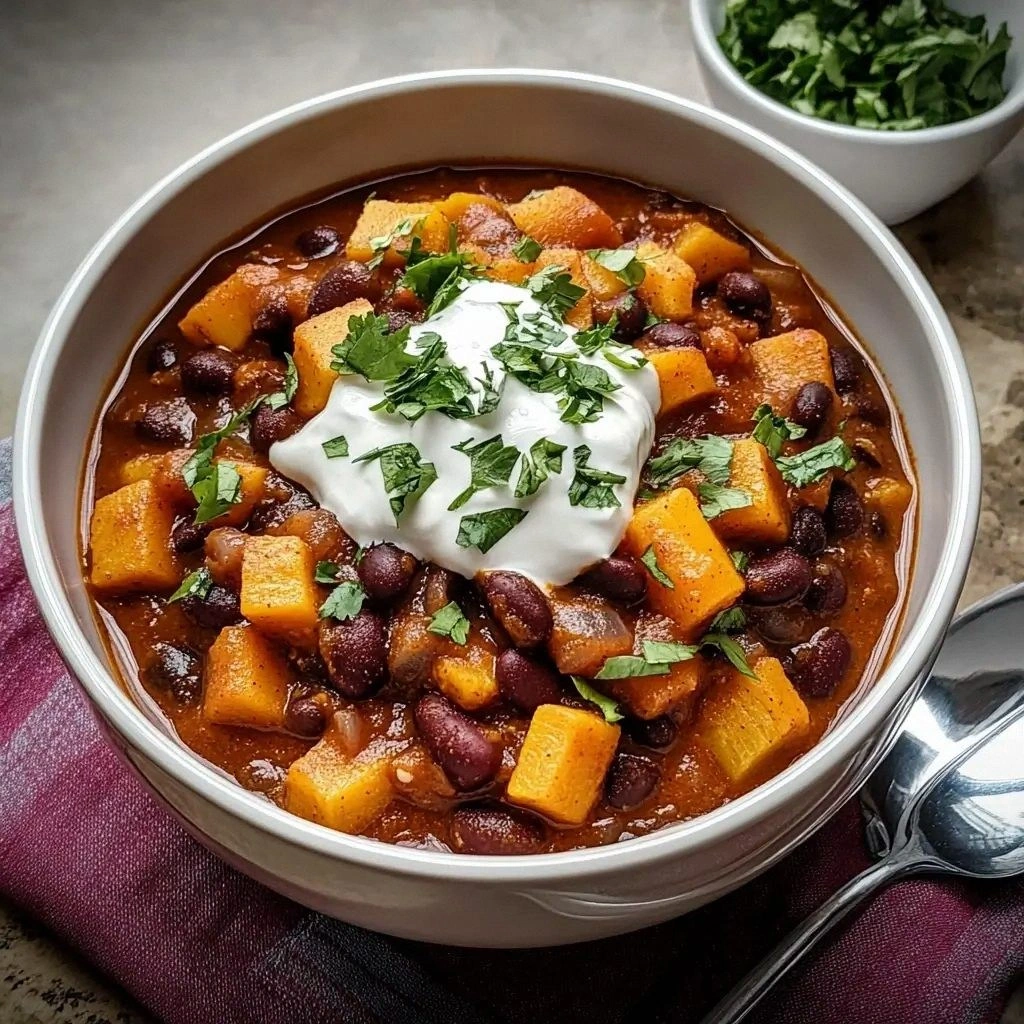
The Method — Step by Step
- Heat 2 tablespoons of olive oil in a large pot over medium heat. Add 1 cup diced onion and sauté until translucent, about 5 minutes. Stir in 3 minced garlic cloves and cook for an additional 30 seconds until fragrant. This step builds the flavor foundation.
- Add 1 cup diced bell pepper and 2 cups diced butternut squash. Cook for 8–10 minutes, stirring occasionally, until the squash starts to soften but still holds its shape. The squash will begin to caramelize, releasing a sweet aroma that signals the chili is on the right track.
- Stir in 2 teaspoons cumin, 2 teaspoons chili powder, 1 teaspoon smoked paprika, and 1 teaspoon dried oregano. Cook for 1 minute, allowing the spices to toast and release their oils. This is where the magic happens; the spices coat the vegetables like a velvet cloak.
- Pour in 2 cups crushed tomatoes and 2 cups vegetable broth. Bring the mixture to a gentle boil, then reduce heat to low and let it simmer for 20 minutes. The liquid should reduce slightly, thickening into a rich sauce. Keep an eye on it; you want the edges to start pulling away, not boiling over.
- Add 2 cups cooked black beans and stir gently. Let the chili simmer for another 10 minutes, allowing the beans to absorb the spices and the flavors to meld. Taste and adjust seasoning with salt and pepper to your preference.
- Just before serving, stir in 1 tablespoon lime juice and a handful of chopped cilantro. The citrus brightens the dish, while the herbs add a fresh, green note that cuts through the richness.
- Serve hot, topped with your favorite garnishes: diced avocado, a spoonful of Greek yogurt, shredded cheddar, or a sprinkle of crushed tortilla chips. Pair with warm cornbread or a side of rice for a complete meal.
That’s it — you did it. But hold on, I’ve got a few more tricks that'll take this to another level…
Insider Tricks for Flawless Results
The Temperature Rule Nobody Follows
Many people think simmering at a low temperature is enough, but I’ve found that a gentle, steady simmer (around 200°F or 93°C) keeps the chili from drying out. If you’re using a gas stove, keep the flame low and let the pot maintain that low heat. A high heat can cause the liquid to evaporate too quickly, leading to a thick, sticky consistency.
Why Your Nose Knows Best
Smell is a powerful cue. When the chili is ready, it should emit a deep, earthy aroma with hints of sweet squash and smoky paprika. If you notice a sour or off smell, it’s a sign the beans may have gone bad or the tomatoes were too acidic. Trust your nose, and you’ll avoid culinary catastrophes.
The 5‑Minute Rest That Changes Everything
Once you’ve finished simmering, let the chili rest for 5 minutes off the heat. This allows the flavors to settle and the sauce to thicken slightly. It also gives the beans a chance to re‑absorb some of the liquid, creating a more cohesive texture.
The Power of a Quick Toast
Before adding the spices, give them a quick toast in the oil for 30 seconds. This releases their essential oils and brings out a richer flavor profile. It’s a small step that makes a big difference.
The Secret Ingredient Swap
If you’re craving a smoky flavor but don’t have smoked paprika, try adding a teaspoon of chipotle powder or a splash of chipotle in adobo. The heat will carry through, and the smoky undertone will still shine.
Creative Twists and Variations
This recipe is a playground. Here are some of my favorite ways to switch things up:
Sweet & Spicy Kick
Add a diced jalapeño or a pinch of cayenne pepper during the sauté stage. The heat will contrast beautifully with the natural sweetness of the squash.
Mediterranean Twist
Swap black beans for chickpeas, add a splash of balsamic vinegar, and finish with a handful of chopped olives. The result is a rich, tangy chili with a Mediterranean flair.
Coconut Cream Finale
Stir in ½ cup of coconut milk at the end for a creamy, tropical finish. It pairs wonderfully with the lime and cilantro.
Breakfast Chili
Serve the chili over a bowl of quinoa or toasted bread, and top with a fried or poached egg for a hearty breakfast.
Low‑Carb Variation
Omit the butternut squash and add more cauliflower florets. Use a low‑sodium vegetable broth to keep the carb count down while still delivering a flavorful punch.
Storing and Bringing It Back to Life
Fridge Storage
Store leftovers in an airtight container for up to 4 days. Keep the chili chilled at 40°F or below to preserve freshness and prevent bacterial growth.
Freezer Friendly
Freeze in portioned containers for up to 3 months. Thaw overnight in the refrigerator before reheating to maintain texture.
Best Reheating Method
Reheat on the stove over low heat, stirring occasionally, until hot. Add a splash of water or broth if the chili has thickened too much. The gentle heat will restore the sauce’s silky consistency.