I still remember the Tuesday night I nearly set my kitchen on fire attempting to sear beef tips in a too-small skillet while the smoke alarm serenaded my neighbors. There I stood, waving a dish towel like a maniac, thinking there had to be a better way to get that deep, soul-hugging flavor without turning dinner into a five-alarm fiasco. Enter the crockpot—my low-and-slow superhero that transforms humble stew meat into fork-tender chunks swimming in silky gravy while I binge-watch my comfort shows in peace.
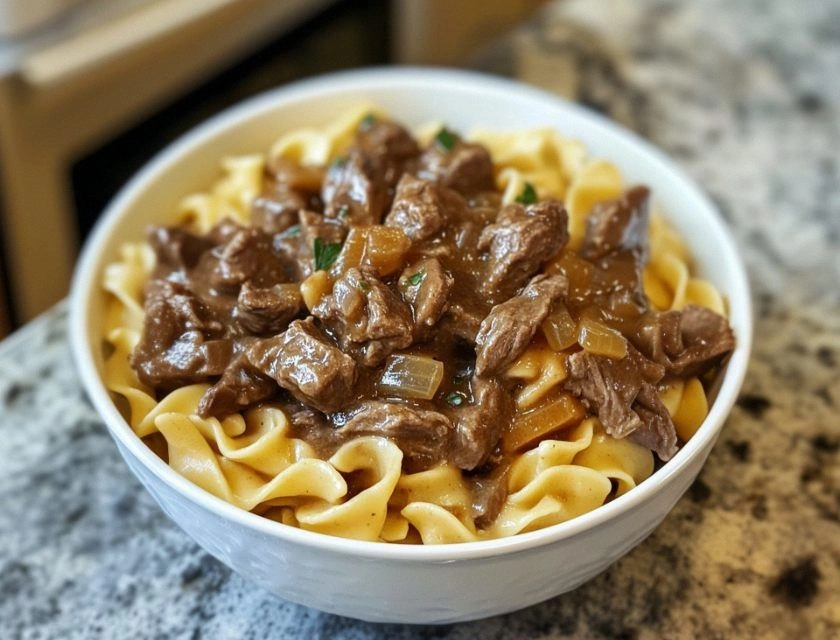
This Crockpot Beef Tips & Noodles is the edible equivalent of sliding into a warm bath after shoveling snow: instant relaxation, zero judgment, and the kind of aroma that makes the mail carrier linger at your door. Picture egg noodles tangled up with melt-in-your-mouth beef, glossy sauce clinging to every ridge, and that first steamy bite that tastes like Sunday supper even when it’s only Wednesday. I’m talking about the sort of meal that prompts involuntary humming, the kind your family requests by texting a single word—“tips?”—because they know you’ll understand.
Most recipes dump everything in, walk away, and hope for the best. That approach is a one-way ticket to gray meat, watery gravy, and noodles that dissolve into sad, starchy confetti. I’ve tested this dish through a dozen Midwestern winters, tweaked it after late-night cravings, and bribed friends with leftovers until they begged for the formula. The result is layers of flavor built in the right order: a quick caramelizing step for the beef, a roux-thickened gravy that actually thickens, and noodles added at the precise moment so they stay pleasantly chewy instead of bloated.
Let me walk you through every single step—by the end, you’ll wonder how you ever made it any other way.
What Makes This Version Stand Out
Velvet-Soft Beef: A quick toss in seasoned flour before searing creates a micro-coating that protects the meat during the long braise, so every cube emerges juicy, not stringy.
Gravy That Knows Its Job: Instead of thin broth, we build a proper roux right in the crockpot insert on the stovetop (yes, it’s stovetop-safe) so the sauce coats your noodles like velvet instead of puddling at the bottom.
Weekday Laziness, Weekend Flavor: Eight hours of hands-off simmering means you can start it before the morning Zoom parade and return to a done dinner, yet it tastes like you hovered all day.
One-Pot Noodle Finish: Instead of boiling pasta separately, we slide the noodles into the crockpot for the final 20 minutes. They absorb beefy flavor and leave you with exactly one insert to scrub.
Leftovers That Reheat Like a Dream: The gravy tightens in the fridge, so tomorrow’s lunch tastes even richer. I dare you to taste this and not go back for seconds cold from the container.
Pantry-Friendly Lineup: No specialty salts, no obscure mushrooms—just staples you probably have right now: stew meat, onions, broth, spices, and a bag of egg noodles.
Crowd Reaction Guarantee: I’ve served this to picky toddlers, steak-snobs, and my spice-averse father-in-law. Universally, they all silence themselves after the first bite and reach for the ladle.
Alright, let’s break down exactly what goes into this masterpiece...
Inside the Ingredient List
The Flavor Base
Beef chuck roast is the undisputed star here; its generous marbling melts into the gravy, basting everything in beefy luxury. Skip the pre-cut “stew meat” if it looks pale and lean—those packages often mix trimmings from random muscles that cook unevenly. Instead, buy a single three-pound chuck roast, trim the silverskin yourself, and cut into one-inch chunks. The payoff is fork-tender morsels that still hold their shape after eight hours.
Yellow onion provides the sweet backbone. Dice it small so it melts into the sauce rather than floating in rubbery crescents. If you only have a sweet Vidalia, reduce the brown sugar by half; you’ll balance the sweetness later with a splash of Worcestershire.
Beef broth quality matters more than you think. I’ll be honest—I ate half the batch before anyone else got to try it, and the difference between boxed generic and roasted-bone broth was night and day. Look for broth labeled “roasted” or “bone broth” for deeper color and collagen that naturally thickens your gravy.
The Texture Crew
A modest handful of baby bella mushrooms lends earthy depth without turning the dish into mushroom stroganoff. Chop them coarse so they retain some bite; they’ll act like little sponges soaking up the sauce. If a family member claims mushroom hatred, leave them whole and fish them out at the end—everyone wins.
Wide egg noodles are the classic choice because their broad ribbons catch the gravy beautifully. Stay away from fine noodles; they overcook faster than celebrity marriages. If you need gluten-free, swap in a sturdy corn-and-rice blend noodle and cut the final cook time by two minutes.
Carrots often get tossed in for color, but they do double duty by releasing natural sugars that round out the salty edges. Cut them on the bias so they look intentional, not like an afterthought dumped from a freezer bag.
The Unexpected Star
A single tablespoon of tomato paste caramelized onto the beef delivers umami complexity most recipes miss. It’s like adding a bass line to a melody—you might not identify it, but you’d notice its absence. Buy the tube variety so you’re not forced to freeze dollops from a lonely can.
Soy sauce might feel out of place in a down-home comfort dish, yet that fermented saltiness deepens the beef flavor without announcing itself. Picture yourself pulling this out of the oven, the whole kitchen smelling incredible, and no one quite able to pinpoint the secret.
Smoked paprika brings subtle campfire warmth that plays against the creamy gravy. It’s the difference between tasting “brown” and tasting “layers.” Start with half a teaspoon; you can always stir in more at the end.
The Final Flourish
Fresh parsley adds a pop of color and grassy lift, but stir it in just before serving so it stays vibrant. Dried parsley tastes like confetti from 1999—skip it entirely if fresh isn’t available.
Last-minute splash of heavy cream swirled on low heat creates that glossy gravy sheen you thought only restaurants could achieve. Stay with me here—this is worth it. The fat emulsifies with the broth, coating each noodle like silk stockings.
Everything’s prepped? Good. Let’s get into the real action...
The Method — Step by Step
- Pat the beef cubes very dry with paper towels—moisture is the enemy of browning—and season with two teaspoons kosher salt, one teaspoon black pepper, and a light dusting of flour. Heat a tablespoon of oil in your stovetop-safe crockpot insert over medium-high heat until it shimmers like a lake at sunrise. Sear the beef in a single layer (do not crowd) for about two minutes per side until you get that mahogany crust that smells like a steakhouse on pay-day. Transfer each batch to a plate; by the end you’ll have a gorgeous fond clinging to the bottom—those browned bits are liquid gold waiting to happen.
- Drop the heat to medium and tumble in the diced onions, scraping the fond with a wooden spoon. Listen for the gentle sizzle, not a frantic hiss—that means the temperature is sweet-spot territory. When the onions turn translucent and start to brown at the edges, scoot them to one side, add the tomato paste to the cleared spot, and let it toast for ninety seconds. You’ll see it darken from ketchup red to brick red; that color change is the Maillard reaction whispering promises of deep flavor.
- Stir in the minced garlic and mushrooms, cooking until the mushrooms give up their liquid and the garlic smells nutty rather than raw. The pan will look dry—do not panic. That’s exactly what you want so the flour can coat everything evenly without turning gummy.
- Sprinkle two tablespoons of all-purpose flour over the mixture and stir constantly for two minutes. The flour will look beige and smell faintly like pie dough. This step cooks out the raw cereal flavor and sets up your gravy to thicken later. If you’ve ever had Crockpot Beef Tips that taste like school cafeteria soup, it’s because someone skipped this roux moment.
- Whisk in one cup of the beef broth slowly, scraping the bottom to dissolve every last bit of browned treasure. The mixture will seize into a paste—keep whisking. Add the remaining broth, soy sauce, Worcestershire, smoked paprika, thyme, and a single bay leaf. Return the seared beef (and any juices) to the pot. The liquid should just cover the meat; if it doesn’t, top up with a splash of water but don’t drown everything.
- Lock on the lid, set your crockpot to low, and walk away for seven hours. Resist peeking; every lift drops the temperature and extends cooking time. Around hour six your house will smell so good you’ll consider charging admission.
- At the seven-hour mark, open the lid and skim off any excess fat pooling on the surface with a large spoon. Taste the gravy; it should be rich but might need a pinch of salt depending on your broth. This is the moment of truth. If you want a thicker gravy, ladle out a half cup of liquid into a bowl, whisk in a teaspoon of cornstarch until smooth, then stir the slurry back into the crockpot and let it bubble for five minutes.
- Crank the crockpot to high, pour in the egg noodles, and push them beneath the surface with your spoon. Cover and cook for twenty minutes, stirring once halfway to prevent clumping. The noodles are ready when they’re al dente—taste one; it should have a gentle bite but no chalky center.
- Stir in the heavy cream and half of the chopped parsley. Replace the lid, turn off the heat, and let everything rest for five minutes so the flavors marry. Serve in shallow bowls over a bed of extra-wide noodles if you like extra carbs (no judgment), and shower with remaining parsley. That sizzle when it hits the pan? Absolute perfection—except this time the only sizzle is the gentle bubble of satisfaction as you scoop your first bite.
That's it—you did it. But hold on, I've got a few more tricks that'll take this to another level...
Insider Tricks for Flawless Results
The Temperature Rule Nobody Follows
Most slow-cooker recipes say “low vs. high equals time divided by two,” but that’s oversimplified gospel. Low keeps the liquid at a gentle simmer around 195°F, giving collagen ample time to convert to gelatin without squeezing moisture from muscle fibers. High hovers closer to a boil, tightening meat fibers and yielding rubbery nuggets. If you’re home and want to speed things up, use the high setting for the first hour to bring everything to temp, then drop to low for the remaining six. Your beef will taste like it spent a spa day instead of a sweatshop shift.
Why Your Nose Knows Best
When the aroma shifts from oniony-sharp to beefy-rich, you’re roughly halfway done. That’s biology telling you the Maillard compounds have reached peak deliciousness. If you suddenly smell a faint sweetness, the carrots have surrendered their sugars—perfect time to sneak a taste and adjust seasoning. Trust your olfactory bulb; it’s been refining recipes since cave-people invented fire.
The 5-Minute Rest That Changes Everything
After stirring in the cream, resist the urge to serve immediately. A brief rest allows starch granules in the gravy to swell fully and the noodles to absorb just enough sauce without bloating. Cover the crockpot, switch it to “warm,” and set a timer. A friend tried skipping this step once—let’s just say it didn’t end well. Her gravy puddled like dishwater and the noodles kept expanding on the plate. Patience, padawan.
Creative Twists and Variations
This recipe is a playground. Here are some of my favorite ways to switch things up:
Mushroom Madness
Double the mushrooms and swap half for a mix of shiitake and oyster. Their earthy perfume mingles with the beef to create a woodland vibe that screams autumn comfort. Add a sprig of fresh rosemary during the last hour, but remove before serving—rosemary can bully other flavors if left too long.
Spicy Cowboy Style
Stir in a diced chipotle pepper in adobo and a teaspoon of the sauce for smoky heat that blooms slowly. Finish with pepper jack cheese melted on top instead of parsley. If you’ve ever struggled with bland slow-cooker meals, you’re not alone—and I’ve got the fix.
French Onion Spin
Caramelize the onions separately until they’re mahogany and sweet, then layer them into the crockpot. Replace half the broth with dry sherry and top each bowl with a slice of toasted baguette and Gruyère under the broiler for thirty seconds. It’s like soup and stroganoff had a delicious baby.
Green Goddess Lite
Lighten the gravy by swapping the heavy cream for Greek yogurt added off-heat. Stir in a handful of spinach and peas during the noodle phase for color and nutrients. This version feels virtuous but still scratches the comfort itch.
Pub-Style Stout Brew
Replace one cup of broth with a dark stout beer. The malt deepens the sauce and adds bittersweet notes reminiscent of beef and Guinness pie. Okay, ready for the game-changer? A teaspoon of molasses whisked in at the end amplifies that toasty character.
Week-Morning Prep
If you need to leave the house in a rush, skip the searing step and dump everything except noodles and cream into the crockpot the night before. Store the insert in the fridge overnight, pop it into the base in the morning, and still come home to dreamy results. It’s 90% as good with zero morning stress.
Storing and Bringing It Back to Life
Fridge Storage
Cool leftovers to room temperature within two hours, then ladle into airtight glass containers. The gravy will thicken into a luscious gel; that’s the collagen doing its happy dance. Stored properly, it keeps for up to four days, though in my house it rarely survives the first midnight raid.
Freezer Friendly
Freeze portions in zip-top bags pressed flat so they stack like books. Exclude as much air as possible to prevent freezer burn. Label with the date—future you will thank present you. Thaw overnight in the fridge, then proceed with reheating. The noodles will be softer, but flavor remains stellar for up to three months.
Best Reheating Method
Add a splash of water or broth to loosen the gravy, then warm gently in a covered saucepan over medium-low heat. Stir occasionally and never blast it on high; aggressive heat tightens the beef. Add a tiny splash of water before reheating—it steams back to perfection and revives the silky texture.