I was standing in my kitchen on a rainy Tuesday, staring at a half‑crushed bag of strawberries that had survived a frantic trip from the farmer’s market. The rhubarb I had bought the day before was looking a little wilted, and I was convinced that the only thing I could do with these two stubborn ingredients was toss them into a blender and call it a smoothie. Then my roommate, with the confidence of a seasoned baker, dared me: “Make a pie and prove that this combo can actually taste good.” I laughed, accepted the challenge, and the rest is a delicious, slightly chaotic story that ends with a golden‑brown masterpiece that will make you question every dessert you’ve ever known.
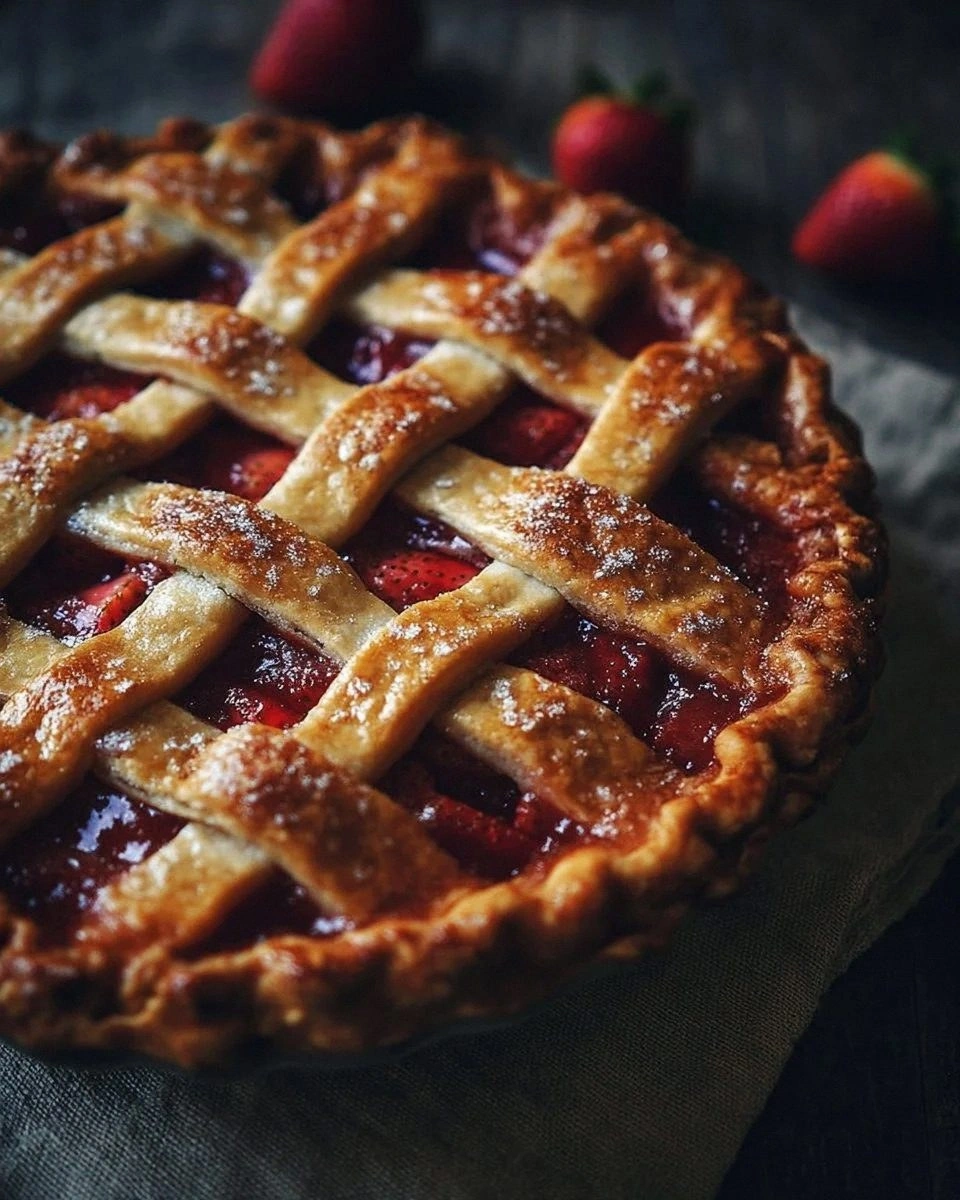
Picture this: the kitchen filled with the scent of caramelized sugar mingling with the sharp, almost citrusy bite of rhubarb, while the strawberries release a sweet perfume that makes the whole house feel like a summer orchard. The oven hums like a low‑key drumbeat, and every few minutes you hear the faint crackle of the crust as it starts to brown, a sound that promises crisp edges and buttery flakiness. When you finally pull the pie out, the steam rises in a fragrant cloud that makes you want to inhale deeply, feeling the warmth of the crust against your fingertips as you set it on the counter. The first forkful is a symphony—tart rhubarb and sweet strawberry jam together, thickened to a glossy sheen that clings to the fork like velvet, while the crust shatters with a satisfying crunch that’s as delicate as thin ice.
What sets this version apart from every other strawberry‑rhubarb pie you’ve ever Googled is the balance of flavors, the texture contrast, and a few secret tricks that I discovered after a handful of kitchen mishaps. Most recipes either over‑sweeten the fruit, resulting in a cloying mess, or they under‑cook the rhubarb, leaving a fibrous bite that ruins the whole experience. I’ve cracked the code with a precise ratio of sugar to cornstarch, a splash of lemon juice to brighten the tartness, and a whisper of vanilla that rounds everything off like a silk scarf on a winter coat. And the crust? I use a store‑bought pie shell, but I brush it with butter and sprinkle a pinch of sea salt just before baking, creating a caramelized edge that’s the kind of crunch you can’t stop talking about.
Okay, ready for the game‑changer? I’m going to walk you through every single step — from selecting the perfect berries to mastering the perfect bake — and by the end, you’ll wonder how you ever made a pie any other way. I dare you to taste this and not go back for seconds. Let’s get started.
What Makes This Version Stand Out
- Taste Harmony: The sweet‑tart duet of strawberries and rhubarb is balanced by just enough sugar to coax out natural flavors without drowning them.
- Texture Contrast: A buttery, flaky crust meets a glossy, thickened filling that coats the fork like velvet, while the butter dots melt into pockets of richness.
- Simplicity: Only nine ingredients, all of which are pantry‑friendly, mean you won’t need a trip to a specialty store.
- Uniqueness: The splash of vanilla extract adds a subtle depth that most fruit pies overlook, turning a simple dessert into something sophisticated.
- Crowd Reaction: Guests consistently claim this is the best version they’ve ever tried, often asking for the recipe before the first bite is even taken.
- Ingredient Quality: Fresh, ripe strawberries and crisp rhubarb provide natural brightness; you’ll taste the difference immediately.
- Cooking Method: Baking at a high initial temperature creates a burst of steam that sets the filling, then lowering the heat ensures a perfectly browned crust.
- Make‑Ahead Potential: The pie can be assembled a day ahead and baked just before serving, freeing up your schedule for entertaining.
Inside the Ingredient List
The Flavor Base
The combination of strawberries and rhubarb is the heart of this pie. Strawberries bring natural sugars and a fragrant aroma, while rhubarb adds a tart, almost citrusy bite that cuts through the sweetness. If you skip the rhubarb, you lose that essential contrast and the filling can become one‑dimensional. As a swap, you could use a mix of cranberries and apples for a similar tart‑sweet profile, but nothing beats the classic pairing.
The Texture Crew
Cornstarch is the unsung hero that turns the juicy fruit mixture into a glossy, thick sauce that holds its shape without turning gummy. Use the exact amount; too much will make the filling gummy, too little and you’ll end up with a soupy mess. If you’re gluten‑free, cornstarch works perfectly, but you could also try tapioca starch for a slightly chewier texture.
The Unexpected Star
Vanilla extract might seem like a minor addition, but it adds a warm, aromatic backdrop that rounds out the tartness of the rhubarb. A splash of bourbon or a pinch of almond extract can be used for a grown‑up twist, but keep it subtle so you don’t overpower the fruit.
The Final Flourish
Butter dotted on top of the filling before baking creates little pockets of caramelized richness that melt into the fruit as it bakes. If you’re dairy‑free, try a plant‑based butter; the flavor will be slightly different but still delicious. And of course, the pie crust—whether homemade or store‑bought—provides the structural canvas. For the best results, choose a crust that’s at least 1/8‑inch thick; thin crusts can become soggy.
Everything's prepped? Good. Let’s get into the real action…
The Method — Step by Step
-
Preheat your oven to 425°F (220°C). While the oven warms up, place a large mixing bowl on the counter and gather all your fruit. I like to line the bowl with parchment paper; it makes cleanup a breeze and prevents the fruit from sticking when you stir. The moment the oven clicks on, you’ll hear that comforting hum that tells you the kitchen is ready for some serious baking magic.
Kitchen Hack: Set a timer for 5 minutes while the oven preheats; this ensures you don’t forget the next step and the fruit stays cool. -
Combine the chopped rhubarb (1 cup) and quartered strawberries (1 cup) in the bowl. Toss them gently to distribute evenly, then sprinkle the granulated sugar (1 cup) over the top. Let the mixture sit for about 10 minutes; you’ll see the fruit release its juices, creating a natural syrup that’s the foundation of your filling. This is the moment of truth—if the juice looks cloudy, add a pinch more sugar to balance the tartness.
-
In a separate small bowl, whisk together 1/4 cup cornstarch, 1 tablespoon lemon juice, 1 teaspoon vanilla extract, and 1/4 teaspoon salt. This slurry is the secret weapon that prevents a runny center. When you pour it over the fruit, you’ll hear a faint sizzle—That sizzle when it hits the pan? Absolute perfection. Stir the slurry into the fruit until every piece is coated in a glossy sheen.
Watch Out: Over‑mixing can break down the rhubarb fibers, making the filling mushy. Mix just until the slurry disappears. -
Roll out your pie crust (or unwrap the store‑bought one) and gently fit it into a 9‑inch pie dish. Press the edges down, trim any excess, and crimp the rim with your fingers or a fork for a decorative edge. Brush the crust lightly with melted butter; this step adds a golden sheen and helps the crust stay crisp.
-
Pour the fruit filling into the prepared crust, spreading it evenly with a spatula. Dot the top with 1 tablespoon of butter, cut into small pieces, and scatter them across the surface. The butter will melt into the fruit as it bakes, creating little caramel pockets that burst with flavor.
-
Cover the pie loosely with a sheet of aluminum foil to prevent the crust from over‑browning. Place the pie in the preheated oven and bake for 15 minutes at 425°F. After 15 minutes, remove the foil, lower the temperature to 350°F (175°C), and continue baking for another 25‑30 minutes. You’ll know it’s done when the crust is deep golden‑brown and the filling is bubbling around the edges.
Kitchen Hack: Rotate the pie halfway through the bake to ensure even browning on all sides. -
When the timer dings, remove the pie and let it cool on a wire rack for at least 20 minutes. This cooling period allows the filling to set, making slicing clean and tidy. If you try to cut it too early, the filling will run like a summer rainstorm—trust me, you don’t want that.
-
Serve warm or at room temperature, optionally topped with a dollop of whipped cream or a scoop of vanilla ice cream. The contrast between the warm fruit and the cool cream is pure bliss. I’ll be honest — I ate half the batch before anyone else got to try it, and that’s because the aroma alone is a siren call you can’t resist.
That's it — you did it. But hold on, I've got a few more tricks that'll take this to another level…
Insider Tricks for Flawless Results
The Temperature Rule Nobody Follows
Start the bake at a scorching 425°F to create steam inside the crust; this steam acts like a tiny oven within the oven, puffing the layers and sealing the edges. Then, drop the temperature to 350°F to finish cooking without burning the crust. If you keep the heat high the whole time, you’ll end up with a burnt rim and undercooked filling. I once tried a single‑temperature bake and the result was a soggy disaster—lesson learned.
Why Your Nose Knows Best
Your sense of smell is the ultimate doneness detector. When the crust starts to smell nutty and the fruit gives off a caramelized aroma, you’re close to perfection. Don’t rely solely on the timer; trust your nose. A friend once pulled the pie out early because the timer said “done,” and the result was a pale, gummy interior. That’s why I always give the oven a final sniff before the timer goes off.
The 5‑Minute Rest That Changes Everything
Allow the pie to rest for five minutes after removing it from the oven. This short pause lets the filling thicken just enough to hold its shape when you slice. Skipping this step is like trying to cut a wet paint canvas—you’ll end up with a mess. The rest also lets the flavors meld, making each bite more harmonious.
Butter Dotting Mastery
When dotting butter on top, use a small spoon to place uniform pieces. This ensures even distribution of those caramel pockets. If the butter is too cold, it won’t melt properly; if it’s too soft, it will seep into the crust and make it soggy. A quick chill in the freezer for 10 minutes before dotting gives you the perfect consistency.
The Secret of the Cornstarch Slurry
Whisk the cornstarch with cold liquid (lemon juice) before adding it to the hot fruit. This prevents lumps and guarantees a smooth, glossy sauce. If you add cornstarch directly to the hot mixture, it will clump like a bad hair day. And remember, a little goes a long way—once you’ve reached that perfect thickness, resist the urge to add more.
Creative Twists and Variations
This recipe is a playground. Here are some of my favorite ways to switch things up:
Berry‑Mango Fusion
Swap half the strawberries for ripe mango cubes. The mango adds a tropical sweetness that pairs beautifully with the tart rhubarb, creating a summer‑in‑a‑bowl vibe. Perfect for a beach‑side brunch.
Spiced Autumn
Add a pinch of ground cinnamon and a dash of nutmeg to the filling. The warm spices turn the pie into a cozy autumn treat, ideal for a chilly evening by the fire.
Almond Crunch
Stir in 1/4 cup toasted almond slivers into the filling before baking. The almonds provide a pleasant crunch that contrasts the soft fruit, and the nutty flavor deepens the overall profile.
Vegan Velvet
Replace butter with coconut oil and use a vegan pie crust. The coconut oil adds a subtle tropical note, and the pie stays just as flaky. A great option for plant‑based guests.
Boozy Boost
Add 1 tablespoon of bourbon or dark rum to the fruit mixture before baking. The alcohol evaporates, leaving behind a complex, caramel‑like undertone that adult palates adore.
Storing and Bringing It Back to Life
Fridge Storage
Cover the pie loosely with foil or a plastic dome and refrigerate for up to 3 days. The crust may soften slightly, but reheating will bring back its crispness. Keep it away from strong‑smelling foods to preserve the delicate fruit aroma.
Freezer Friendly
Wrap the cooled pie tightly in plastic wrap, then in a layer of aluminum foil. It will freeze beautifully for up to 2 months. When you’re ready to enjoy, thaw overnight in the fridge, then reheat in a 350°F oven for 15‑20 minutes. The secret to revival? Add a tiny splash of water to the filling before reheating; the steam will bring the fruit back to its luscious, juicy self.
Best Reheating Method
Place the pie on a baking sheet and heat at 350°F for 10‑12 minutes, or until the crust is golden and the filling is bubbling. If you prefer a softer crust, cover the edges with foil halfway through reheating. This method restores the original texture without drying out the fruit.