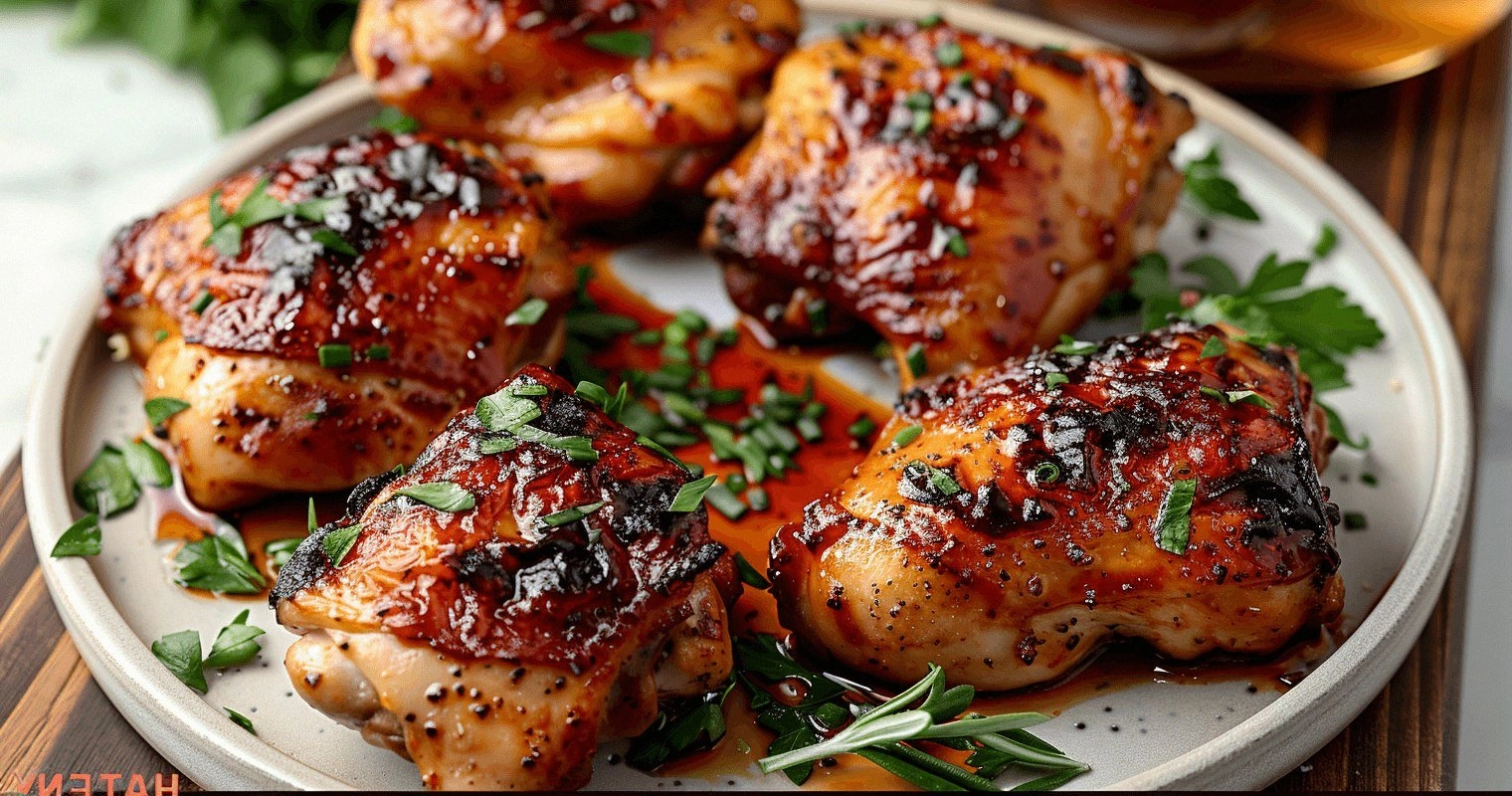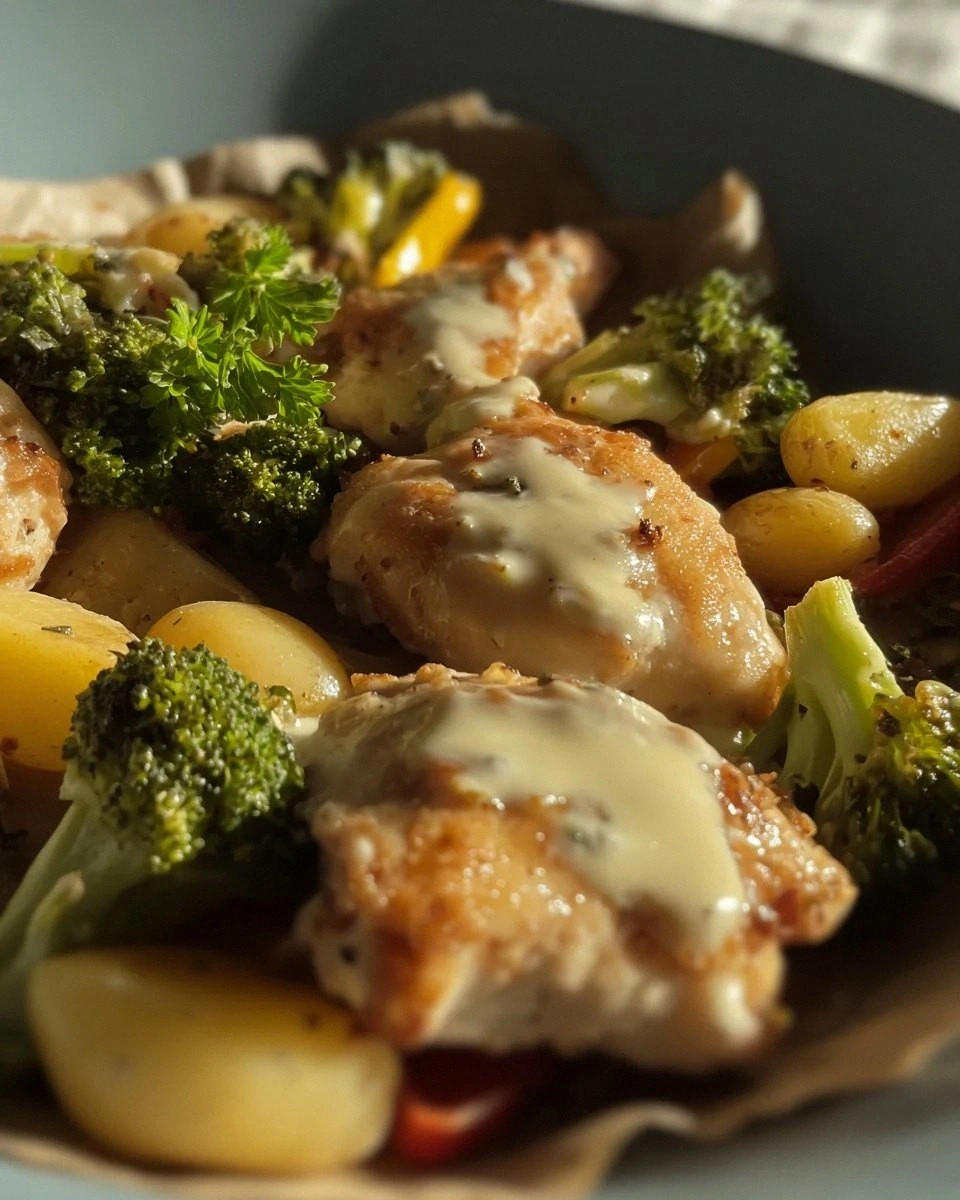
Picture this: it was a Tuesday night, I was already in my pajamas, and my stomach was growling louder than my neighbor's chihuahua. The fridge was a wasteland of half-empty condiment bottles and a lonely bag of baby carrots. Takeout felt like surrender, but the idea of scrubbing multiple pans made me want to crawl back under the blanket. That's when I spotted the jar of honey mustard hiding behind the soy sauce, and the lightbulb moment hit me so hard I nearly dropped the fridge door. Thirty-five minutes later, I was standing over a sheet pan of the most outrageously glossy, sticky, caramelized chicken thighs and roasted vegetables that had ever graced my oven, and I was doing a little victory dance in my socks. The smell alone could've solved world peace negotiations — sweet, tangy, garlicky, with those crispy edges that shatter like thin ice under your fork. I am not exaggerating when I say I ate half the batch standing up at the counter, burning my tongue because I couldn't wait for it to cool. If you've ever stared into the abyss of your kitchen and wondered if flavor could possibly emerge from such chaos, this recipe is your lifeline. We're talking about the kind of dinner that feels like a cozy restaurant hug but requires zero fancy footwork, just one pan and a willingness to let your oven do the heavy lifting. Okay, ready for the game-changer? Let me walk you through every single step — by the end, you'll wonder how you ever made it any other way.
What Makes This Version Stand Out
Flavor Bomb: Most honey mustard recipes taste like someone waved a bottle of dressing near the chicken and called it a day. Not here. We build layers: a quick sear for fond, a glaze that caramelizes into candy-like lacquer, and a final drizzle of tangy mustard right at the end so the heat blooms the spices without killing the zing.
One-Pan Magic: Everything — protein, veggies, sauce — happens on a single rimmed sheet. No boiling, no sautéing, no mountain of dishes. You literally line the pan, toss, roast, and done. If you've ever struggled with timing multiple components, you're not alone — and I've got the fix.
Texture Contrast: We're talking crispy chicken skin that crackles, tender meat that pulls apart with a gentle nudge, and vegetables that go from raw to roasted-creamy with charred tips. Most recipes get this completely wrong and steam everything into mush. Here's what actually works.
Weeknight Fast: Active time is fifteen minutes, tops. The oven does the rest while you answer emails or pour yourself a glass of wine. Picture yourself pulling this out of the oven, the whole kitchen smelling incredible, and your family suddenly appearing like cartoon characters drawn by the aroma.
Meal-Prep Hero: These thighs reheat like champions, and the glaze keeps them juicy for days. I dare you to taste this and not go back for seconds — or thirds — straight from the fridge at midnight.
Crowd-Pleasing Flex: Sweet enough for kids, sophisticated enough for dinner guests. Swap broccoli for green beans or use boneless thighs if that's what you have; the technique flexes with you.
Inside the Ingredient List
The Flavor Base
Chicken thighs are the unsung heroes of weeknight dinners. They stay succulent even if you accidentally overcook them by a few minutes, and their slightly higher fat content means they can stand up to bold sauces without drying out. I use bone-in, skin-on because the skin renders and crisps into a crunchy canopy that crackles under your teeth. If you only have boneless, reduce the oven time by about eight minutes and still sear them first for fond. And please, please buy the good honey — the cheap stuff is basically corn syrup wearing a costume; raw wildflower honey adds floral depth that makes people ask, "What is that amazing flavor?"
The Texture Crew
Broccoli florets, baby rainbow carrots, and red onion wedges aren't just colorful; they roast at slightly different rates, giving you a medley of textures from creamy to caramelized. Cut the broccoli into substantial florets so they don't vanish into charred dust, and halve those carrots lengthwise for maximum surface area to blister. The onion practically melts into honey-sweet jammy pockets that you'll fight over. Feel free to sub in cauliflower, Brussels sprouts, or even cubes of butternut squash — just keep the pieces roughly the same size so everything finishes together.
The Unexpected Star
Dijon mustard is obvious, but the sneaky addition of whole-grain mustard is where the magic hides. Those little seeds pop between your teeth like caviar, releasing tiny bursts of acidity that keep the honey from becoming cloying. A splash of apple cider vinegar brightens everything, while a whisper of smoked paprika adds a campfire note that makes people ask if you grilled the chicken. Don't skip it — even if you think you hate smoked paprika, the amount here is so small it just reads as "mysterious depth," not "ashtray."
The Final Flourish
Fresh thyme leaves strip off the stems in seconds and perfume the glaze with woodsy aroma. If you only have dried, use one-third the amount and crumble it between your palms to wake up the oils. A final shower of lemon zest right before serving wakes up every other flavor like a splash of cold water on a sleepy face. And flaky sea salt — that crunchy finish makes the difference between home cook good and restaurant unforgettable.
The Method — Step by Step
- Crank your oven to 425°F (220°C) and place the rack in the upper-middle position. High heat is non-negotiable — it's what turns the honey into sticky lacquer instead of a sad puddle. While it heats, line a rimmed sheet pan with parchment for easy cleanup, but leave a border so the chicken skin can still kiss the metal and crisp. Pat those thighs absolutely dry with paper towels; moisture is the enemy of crunch, and we are here for crunch. Season both sides generously with kosher salt and cracked black pepper — be brave, most of it will stay on the surface and season the vegetables below.
- Whisk together the honey, both mustards, apple cider vinegar, smoked paprika, and a pinch of salt in a small bowl. The mixture should ribbon off the spoon like liquid gold. Taste it — it should make your tongue tingle with sweet, sharp, and smoky all at once. Reserve two tablespoons of this sauce for later; we'll use it as a final glaze so the flavors stay bright. If you taste this and don't go back for seconds with your spoon, I'll be honest — I ate half the batch before anyone else got to try it.
- Heat a heavy skillet over medium-high for two minutes until a drop of water skitters across like a hyperactive beetle. Add a teaspoon of oil and swirl. Lay the chicken thighs skin-side down and don't move them for four minutes. That sizzle when it hits the pan? Absolute perfection. You're not cooking them through — just rendering the fat and building a golden crust that will hold up under the honey glaze. Flip, cook another two minutes, then transfer to a plate.
- Now the fun part. Toss the vegetables with a tablespoon of the honey mustard sauce, a glug of olive oil, and a pinch each of salt and pepper. Spread them in a single layer on the sheet pan, creating little nests where the chicken will sit so the veggies roast underneath and catch all the drippings. Nestle the thighs skin-side up among the vegetables, brushing each with a thick coat of sauce. The sauce will slide down and perfume everything — stay with me here, this is worth it.
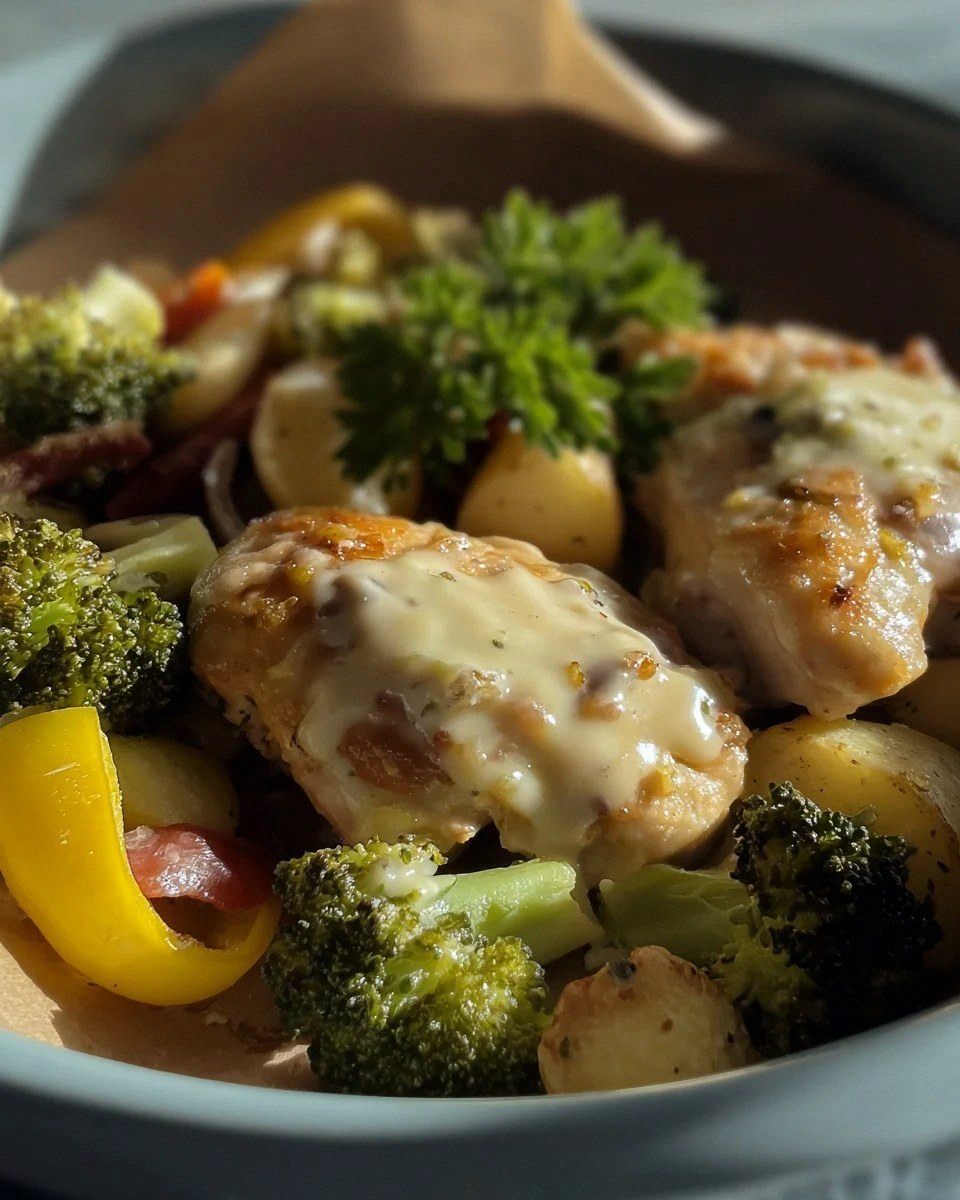
- Slide the pan into the oven and roast for twenty-five to thirty minutes, basting once halfway with the pan juices. The honey will bubble and threaten to burn — that's okay. You want deep mahogany edges and an internal temp of 175°F on the thighs. The vegetables should have charred tips and creamy centers. If the skin needs more crisp, switch to broil for the final two minutes, but watch like a hawk; honey goes from caramel to charcoal faster than a toddler moods swing.
- While everything roasts, strip the thyme leaves and zest the lemon. Mix the reserved glaze with the thyme and a squeeze of lemon juice — this is your finishing sauce. When the chicken comes out, brush it with this fresh layer so you get that bright pop against the rich roast. Let everything rest five minutes; the juices will settle back into the meat instead of running all over your plate like escaped convicts.
- Serve straight from the pan for rustic charm, or transfer to a platter and shower with lemon zest and flaky salt. The sauce underneath is liquid gold — spoon it over rice, mashed potatoes, or just drag crusty bread through it like you're mopping up sunshine. Future pacing: tomorrow you'll shred leftover chicken into the veggies, add a splash of broth, and call it the best soup you've ever slurped.
That's it — you did it. But hold on, I've got a few more tricks that'll take this to another level...
Insider Tricks for Flawless Results
The Temperature Rule Nobody Follows
Most recipes tell you 165°F, but thighs are forgiving; pushing them to 175°F melts the collagen into silky jelly that keeps the meat juicy even when reheated. Use an instant-read thermometer right in the thickest part, away from bone. If you don't have one, pierce with a skewer — the juices should run clear with no pink, but still look glossy, not dry. A friend tried skipping this step once — let's just say it didn't end well, and we still tease him about "rubber chicken night."
Why Your Nose Knows Best
Trust your senses over the clock. When the kitchen smells like honeyed bacon and you see mahogany bubbles around the pan edges, you're thirty seconds from perfect. If it smells sharp or acrid, you've crossed into bitter territory — yank that pan immediately and transfer the chicken to a fresh sheet. The scent should make you involuntarily smile; if you're not grinning, adjust the heat or move the rack.
The 5-Minute Rest That Changes Everything
I know the aroma is taunting you, but tent the pan loosely with foil and walk away. Those five minutes let the muscle fibers relax so juices don't flood your cutting board. Meanwhile, the residual heat finishes any underdone veggies without turning them to mush. Use the time to pour drinks or set the table — dinner will still be hot, but it won't hemorrhage flavor when you slice in.
The Honey Swap Secret
Out of honey? Maple syrup brings a darker, more robust sweetness that plays beautifully with the mustard's bite. Use the same amount, but reduce the vinegar by half teaspoon because maple already carries acidic notes. Brown sugar works too, but whisk in a teaspoon of hot water so it dissolves smoothly and doesn't burn into bitter pebbles.
Creative Twists and Variations
This recipe is a playground. Here are some of my favorite ways to switch things up:
Spicy Honey Heatwave
Whisk a teaspoon of sriracha into the glaze and swap smoked paprika for chipotle powder. Add cubed sweet potatoes to the vegetables — they roast into candy-like nuggets that tame the fire. Finish with sliced scallions and a squeeze of lime. Perfect for friends who believe dinner isn't complete unless their nose runs slightly.
Mediterranean Sunshine
Replace the mustard with whole-grain Dijon plus a teaspoon of oregano. Trade carrots for zucchini and cherry tomatoes, and toss in olives during the last ten minutes. Crumble feta over the top right before serving and add a shower of fresh dill. It tastes like summer vacation on a coastal villa, even in the dead of winter.
Autumn Harvest
Use butternut squash cubes and Brussels sprout halves, and swap the thyme for rosemary. Add a diced apple to the vegetable mix — it roasts into honey-soft pockets that burst with tart sweetness. A sprinkle of toasted pecans at the end gives you crunch that echoes the crispy chicken skin.
Low-Carb Green Machine
Skip carrots and use broccoli, bell pepper strips, and thick slabs of cabbage. The cabbage edges char into smoky "steaks" while the centers turn buttery. Swap honey for allulose to keep carbs minimal; it caramelizes faster, so lower the oven to 400°F and watch closely.
Sticky Asian Fusion
Sub white miso for half the mustard, add a tablespoon of sesame oil to the glaze, and sprinkle everything with sesame seeds. Use baby bok choy and shiitake caps as your vegetables. Finish with thinly sliced chili and a drizzle of rice vinegar for brightness. The umami punch is so deep you'll swear you ordered takeout from the best izakaya in town.
Vegetarian Comfort
Keep the glaze exactly the same but pour it over thick slabs of tofu that you've pressed and seared until golden. Surround with the same vegetables, and add chickpeas for protein heft. The tofu drinks up the sauce like a sponge, giving you that same glossy, sticky satisfaction without the meat.
Storing and Bringing It Back to Life
Fridge Storage
Let everything cool completely, then pack chicken and vegetables together in shallow, airtight containers so they chill quickly and evenly. They'll keep four days, though honestly they've never lasted past three in my house. Store extra glaze separately — it thickens into a spread that's outrageous on sandwiches or drizzled over scrambled eggs.
Freezer Friendly
Freeze individual portions in zip-top bags with as much air pressed out as possible; the honey in the glaze prevents ice crystals from forming, so texture stays surprisingly intact. Thaw overnight in the fridge, not the microwave, or you'll turn the veggies to sad mush. Frozen portions reheat beautifully for up to two months — perfect emergency lunch rescue.
Best Reheating Method
Add a tiny splash of water to the container before microwaving — it steams back to perfection. For skin that crackles again, reheat in a 400°F oven or air-fryer for six minutes. Pro move: chop leftovers, warm in a skillet, crack an egg on top, and cover for three minutes. Instant honey mustard hash that'll make you look forward to Monday mornings.