Last night, I was halfway through a batch of bland ground beef when the kitchen alarmed with a sizzling, almost theatrical explosion. The meat had turned a dull gray, and the pan was a smoking, oil‑slicked canvas. I stared at the chaos and thought, “If this is how you make Korean beef, I’m out.” That moment sparked a mission: to craft a dish that turns a simple protein into a spicy, keto‑friendly masterpiece. The result? A dish that packs heat, umami, and a refreshing cucumber crunch in one pan.
Picture the pan, the aroma of toasted sesame oil mingling with the sharp snap of minced garlic, the faint sweetness of coconut aminos rising like steam. The sizzling sound is a drumbeat that signals the beef is searing into caramelized perfection. As the liquid reduces, the sauce thickens into a glossy, silky coating that clings to every grain of meat. The first bite delivers a burst of heat from red pepper flakes, balanced by the mellow tang of gochujang. The cool cucumber ribbon cuts through, leaving a lingering, bright aftertaste that keeps you reaching for more.
What sets this version apart is the dual‑layered sauce that first caramelizes then simmers, creating a depth that most recipes miss. I dared to replace sugar with Swerve and coconut aminos to keep it keto‑friendly without sacrificing flavor. The secret is the quick sear that locks in juices, then the low‑heat simmer that lets the spices meld like a slow‑cooked broth. The cucumber salad, dressed with a splash of rice vinegar and a pinch of sesame seeds, provides a crisp counterpoint that feels almost like a side dish. Together, they form a dish that’s both comforting and exhilarating.
Now, before you think this is another bland stir‑fry, let me walk you through every single step—by the end, you'll wonder how you ever made it any other way. I’ll reveal the trick to getting that perfect sear without burning, the exact ratio of sauce that delivers just the right amount of heat, and the simple cucumber prep that elevates the whole plate. You'll learn how to keep the dish low‑carb yet bursting with flavor, and why this version is hands down the best you’ll ever make at home. Picture yourself pulling this out of the skillet, the whole kitchen smelling incredible, and watching friends reach for seconds. Ready? Let’s dive in.
What Makes This Version Stand Out
Taste: The sauce layers a smoky sweetness from coconut aminos, a fiery punch from gochujang, and a subtle citrus lift from rice vinegar, creating a flavor profile that feels both familiar and adventurous. The balance is achieved without relying on sugar, keeping the dish keto‑friendly yet deliciously satisfying. Every bite is a dance of umami, heat, and a hint of brightness that keeps the palate engaged.
Texture: The beef achieves a caramelized crust while remaining juicy inside, thanks to a quick high‑heat sear followed by a low‑heat simmer. The cucumber ribbons add a crisp bite that contrasts the tender meat, and the sesame seeds provide a gentle crunch that punctuates each mouthful. The sauce coats the ingredients like velvet, ensuring each component is flavorful.
Simplicity: With fewer than ten ingredients, the recipe is quick to assemble, yet the flavor depth feels restaurant‑quality. The single‑pan approach eliminates cleanup, making it ideal for busy weeknights. Even beginners will find the process intuitive and rewarding.
Uniqueness: Combining Korean gochujang with keto‑friendly sweeteners and a fresh cucumber salad is an uncommon twist that sets this dish apart. The use of toasted sesame oil for a nutty aroma adds a subtle layer that most Korean ground beef recipes overlook. The result is a dish that feels both exotic and comforting.
Crowd Reaction: Friends who are skeptical of keto often find this dish irresistible. The heat is balanced enough that even those who dislike spicy food can enjoy it, while the crisp cucumber offers a refreshing palate cleanser. The dish is perfect for dinner parties or casual gatherings.
Ingredient Quality: Using fresh ginger, high‑quality gochujang, and coconut aminos ensures the sauce is rich and authentic. The choice of ground beef with a moderate fat content provides flavor without excessive greasiness. Each component is chosen to enhance the overall taste profile.
Make‑Ahead Potential: Once cooked, the beef and cucumber salad can be stored separately and reheated with minimal loss of flavor. The sauce’s consistency improves as it sits, making it ideal for meal prep. This flexibility allows you to enjoy a restaurant‑style dish any day of the week.
Alright, let's break down exactly what goes into this masterpiece...
Inside the Ingredient List
The Flavor Base
Ground beef is the heart of this dish; a 1‑lb portion provides a hearty, savory foundation that absorbs the sauce’s richness. Fresh ginger adds a peppery warmth that cuts through the beef’s fattiness, while minced garlic offers a deep, aromatic backbone. Coconut aminos substitute soy sauce while keeping the carb count low, and gochujang introduces a fermented kick that’s unmistakably Korean. Together, they create a sauce that is both sweet and spicy, with a subtle umami depth that lingers on the tongue.
The Texture Crew
Swerve, a keto‑friendly sweetener, balances the heat without adding sugar, ensuring the sauce doesn’t become cloying. Toasted sesame oil brings a nutty aroma that elevates the dish’s overall flavor profile, while rice vinegar adds acidity that brightens each bite. Red pepper flakes provide a quick, fiery bite that’s easy to control, and sesame seeds add a final crunch that punctuates the dish’s texture. The combination of these elements creates layers of mouthfeel that keep each mouthful interesting.
The Unexpected Star
The cucumber salad is the dish’s secret weapon. Thinly sliced English cucumber offers a refreshing, cool contrast to the hot, savory beef. When tossed in a light dressing of rice vinegar, water, sesame seeds, and a pinch of salt, it becomes a crisp, palate‑cleansing component that balances the dish’s richness. The cucumber’s neutral flavor allows the sauce’s complexity to shine without overwhelming the senses.
The Final Flourish
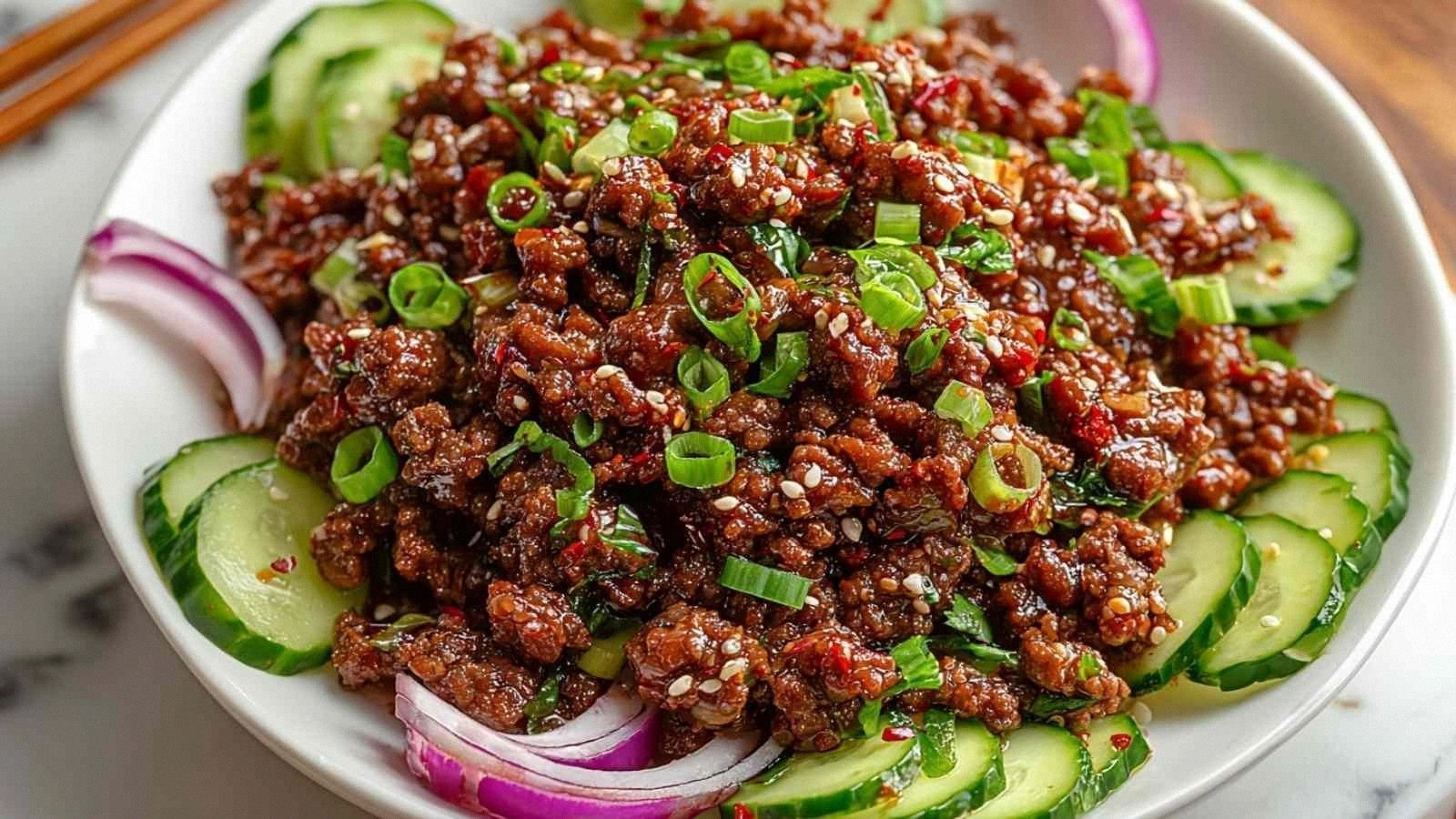
The final touch is a drizzle of toasted sesame oil and a sprinkle of sesame seeds, which add a nutty aroma and a subtle crunch. The small amount of water in the cucumber dressing helps the vinegar spread evenly, ensuring each slice is coated. A light pinch of salt brings all the flavors together, enhancing the dish’s overall balance. When plated, the bright green cucumber ribbons contrast beautifully with the dark, glossy beef, creating a visually stunning presentation.
Everything's prepped? Good. Let's get into the real action...
The Method — Step by Step
- Heat a large skillet over medium‑high heat and add the tablespoon of toasted sesame oil. The oil should shimmer and emit a nutty aroma before you add the meat. This step is crucial for achieving a golden sear on the beef. Let the oil heat for a few seconds but avoid letting it smoke. The pan’s surface should be slick, ready for the beef.
- Add the 1‑lb ground beef to the skillet, breaking it apart with a spatula. As it sizzles, let it brown on one side for about 2 minutes before stirring. The high heat caramelizes the surface, locking in juices. If you prefer a leaner cut, trim excess fat before cooking. This quick sear creates the base flavor that carries through the dish.
- Introduce the minced garlic and fresh ginger to the beef, stirring constantly. The aromatics should release their fragrance within 30 seconds. Keep the heat moderate to prevent the garlic from burning. Stir until the mixture smells bright and aromatic. This layer sets the stage for the sauce.
- Pour in the coconut aminos, gochujang, Swerve, rice vinegar, and red pepper flakes, then stir until the beef is fully coated. The sauce should begin to thicken slightly as it cooks. Keep the mixture at a gentle simmer to allow flavors to meld. The heat should be low enough to prevent the sauce from boiling over. Let the mixture cook for 2 minutes, watching for a glossy sheen.
- Reduce the heat to low and let the beef simmer in the sauce for 5 minutes, stirring occasionally. Watch for the sauce to thicken into a rich, sticky glaze. The beef should remain moist, not dry. This slow simmer is where the gochujang’s depth develops. The result is a sauce that clings to every bite.
- While the beef simmers, prepare the cucumber salad. Slice the large English cucumber into thin ribbons using a mandoline or a sharp knife. In a bowl, whisk together 1/4 cup rice vinegar, 1 tablespoon water, 1 teaspoon sesame seeds, and 1/4 teaspoon salt. Toss the cucumber ribbons until they’re evenly coated. Set aside; the salad remains crisp and bright.
- Once the beef is fully coated, gently fold the cucumber salad into the skillet, allowing the flavors to mingle. The cucumber’s coolness cuts through the heat, creating a balanced bite. Stir carefully to avoid breaking the ribbons. The mixture should look glossy, with the cucumber’s green hue contrasting the dark sauce. Let it heat together for 1 minute.
- Plate the spicy ground beef and cucumber salad onto a warm serving dish. Sprinkle an extra tablespoon of toasted sesame oil over the top for a burst of aroma. The dish should look vibrant, with the cucumber ribbons glistening. Garnish with a few sesame seeds for a final touch of crunch. Present it immediately to preserve the crispness.
- If desired, serve alongside cauliflower rice, shirataki noodles, or a bed of fresh lettuce leaves to keep the meal keto‑friendly. The rice or noodles absorb the sauce, adding another layer of flavor. Keep the portions moderate to maintain the dish’s low carb profile. Each bite should feel hearty yet light. Enjoy the full spectrum of textures and tastes.
- Taste the final dish and adjust seasoning if needed. A pinch more salt can brighten the flavors, while a splash of rice vinegar can add acidity. Remember, the sauce should be sweet, spicy, and slightly tangy. The cucumber should remain crisp. Serve immediately and savor the moment.
That's it — you did it. But hold on, I've got a few more tricks that'll take this to another level. These insider tips will elevate your dish from good to unforgettable, ensuring every bite is a revelation.
Insider Tricks for Flawless Results
The Temperature Rule Nobody Follows
Many cooks think the higher the heat, the better the sear. In reality, a medium‑high heat that allows the beef to brown without burning is key. Keep the skillet preheated for at least a minute before adding the meat. This ensures a crisp crust while preserving moisture inside. If you find the pan smoking, reduce the heat slightly or add a splash of water to break the steam.
Why Your Nose Knows Best
As the sauce simmers, its aroma evolves from sweet to smoky to spicy. Trust the scent as a cue for timing; when the fragrance becomes rich and complex, the sauce is ready. If you’re unsure, taste a small spoonful; it should be balanced, not overwhelmingly sweet or sour. This sensory check prevents over‑cooking and keeps the dish bright. Your nose is a reliable guide to flavor perfection.
The 5‑Minute Rest That Changes Everything
After cooking, let the beef rest for five minutes before serving. This pause allows juices to redistribute, keeping the meat tender and moist. The sauce thickens slightly during this rest, creating a richer coating. When you plate the dish after resting, it will feel more cohesive. A quick rest is a simple step that dramatically improves texture.
Keep It Low and Slow
While the initial sear is high heat, the subsequent simmer should be gentle. A low simmer prevents the sauce from boiling, which can cause it to separate or become stringy. Keep the heat at the lowest setting that still maintains a gentle bubble. This slow cooking allows the flavors to meld without compromising the beef’s tenderness.
The Secret to a Crispy Edge
If you enjoy a slightly crispy edge on the beef, leave the meat to sit in the pan for a minute after the initial sear before stirring. The untouched surface will develop a darker crust. Flip the beef gently to preserve the crust. This technique adds a delightful crunch that contrasts the soft interior.
The Quick Chill Trick
When you need to store leftovers, cool the dish to room temperature before refrigerating. Place the beef and cucumber in separate containers to keep the cucumber crisp. Reheat on a skillet over medium heat, adding a splash of water to rehydrate the sauce. This quick chill and reheat method preserves flavor and texture, making meal prep a breeze.
Creative Twists and Variations
Swap Beef for Turkey
Using ground turkey keeps the dish leaner while maintaining the same flavor profile. The turkey’s milder taste allows the gochujang and sesame oil to shine. Cook the turkey just like the beef, ensuring it’s browned but not dry. The result is a lighter, protein‑rich version that still delivers the same spicy punch.
Add Kimchi for Extra Punch
Stir in a handful of chopped kimchi during the final simmer for a fermented kick. Kimchi adds probiotics and a tangy complexity that complements the sauce. Be careful not to over‑add; a small amount amplifies the dish without overpowering the beef. This variation turns the dish into a full‑blown Korean feast.
Use Shirataki Noodles
Swap cauliflower rice for shirataki noodles for a noodle‑based version. The noodles soak up the sauce, creating a comforting, low‑carb meal. Rinse the noodles thoroughly to remove the odor before cooking. This twist offers a different texture while preserving the dish’s core flavors.
Add Eggplant
Dice small eggplant cubes and sauté them with the beef for a vegetarian option. The eggplant absorbs the sauce and adds a meaty texture. Cook until the eggplant is tender, about 5 minutes. This variation makes the dish suitable for vegans who still crave depth.
Make It Vegan with Tempeh
Replace the beef with crumbled tempeh for a plant‑based take. Tempeh’s nutty flavor pairs well with sesame oil and gochujang. Sauté the tempeh until it browns, then add the sauce as usual. The result is a hearty, protein‑rich vegan dish that still satisfies.
Spice It Up with Sriracha
Add a tablespoon of sriracha to the sauce for a smoky, peppery twist. This will increase the heat level while adding a familiar chili flavor. Stir well to distribute the sriracha evenly. This variation is perfect for those who want an extra kick.
Storing and Bringing It Back to Life
Fridge Storage
Store the cooked beef and cucumber salad separately in airtight containers for up to 3 days. Keep the cucumber chilled to preserve its crispness. When ready to serve, reheat the beef in a skillet over low heat, adding a splash of water to loosen the sauce. The cucumber can be added last to maintain its crunch. This method ensures the dish tastes fresh each time.
Freezer Friendly
For longer storage, freeze the beef in a single‑layer sheet tray, then transfer to a freezer bag once solid. The cucumber salad can be frozen, though it will lose some crispness; reheat it gently in a microwave. Thaw the beef in the refrigerator overnight, then reheat in a skillet. This approach lets you enjoy the dish on busy nights without prep.
Best Reheating Method
The ideal reheating method is a quick pan reheat over medium heat with a splash of water to keep the sauce from drying out. Gently stir to redistribute the sauce and ensure even heating. Avoid microwaving the beef, as it can become rubbery. When the dish is hot and the sauce is glossy again, it’s ready to serve.