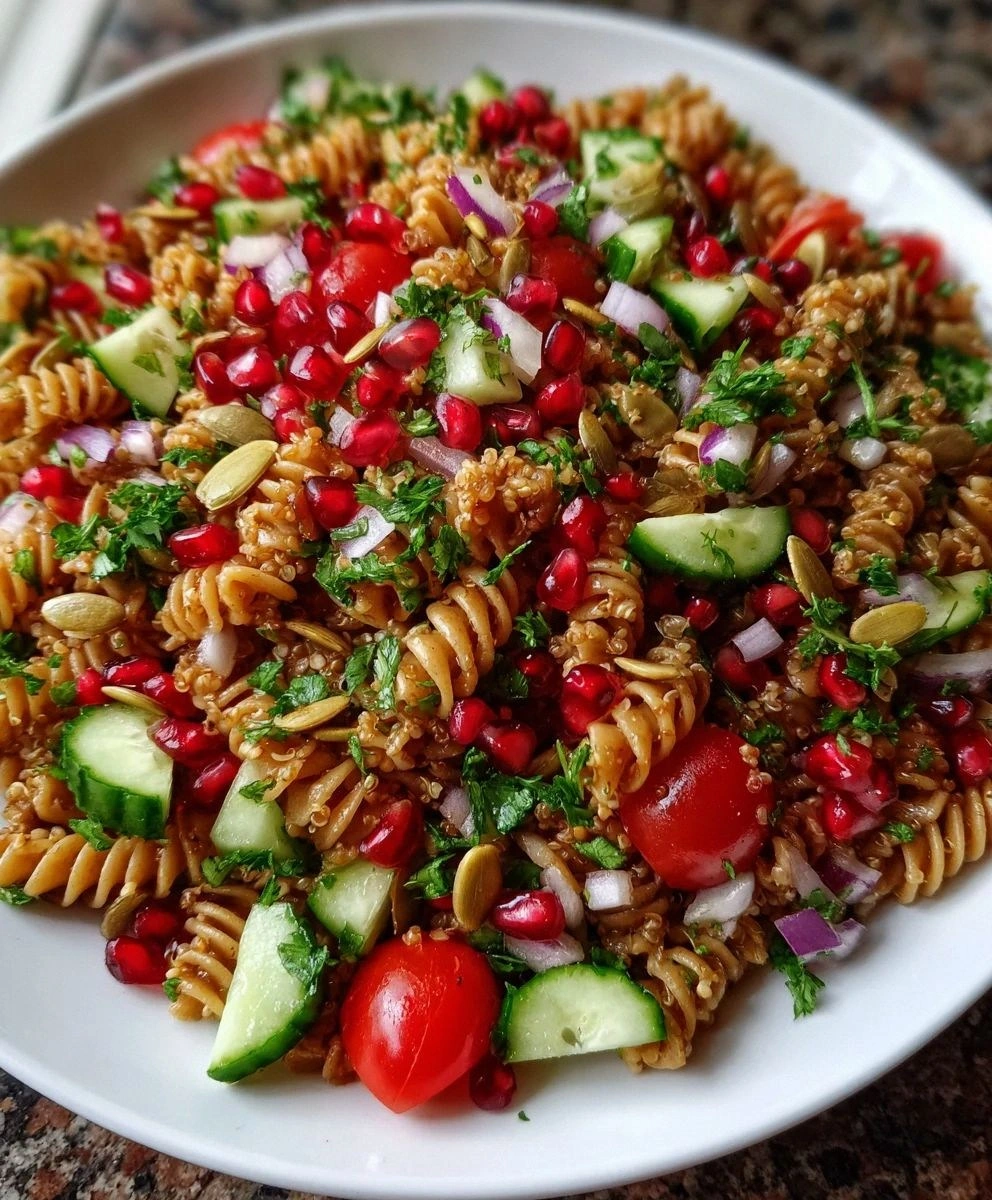
I still remember the day I almost set my kitchen on fire because I was too busy day-dreaming about this salad. There I was, toasting quinoa in a dry pan while simultaneously trying to de-seed a pomegranate like some kind of amateur magician, when the smoke alarm decided to join the party. My neighbor burst through the door with a fire extinguisher, only to find me standing there with pomegranate arils stuck to my shirt, sniffing the air like a bloodhound because I swear I could already taste the finished dish in my mind. That smoky, nutty quinoa mixed with those ruby gems of pomegranate, all tangled up with perfectly al dente pasta — I knew I was onto something magical even as I frantically fanned the smoke away from the detector.
Fast forward through three weeks of obsessive testing, and I'm here to tell you that this Quinoa Pasta Pomegranate Salad is the superhero your lunchbox has been waiting for. It's the culinary equivalent of that friend who shows up to the party in a killer outfit, brings the best snacks, and somehow still manages to be the most interesting person in the room. The quinoa brings this incredible nutty depth that makes you wonder why you ever settled for plain pasta salad, while those pomegranate seeds explode like tiny flavor fireworks with every bite. And here's the kicker — it actually gets better after a day in the fridge, which means you can be that person who meal-preps on Sunday and still eats like royalty on Friday.
What really sets this version apart from every sad deli counter pasta salad you've ever endured is the way each component gets its moment to shine. We're not just throwing ingredients together and hoping for the best — oh no, we're building layers of flavor like we're constructing the food equivalent of a symphony orchestra. The quinoa gets toasted until it smells like popcorn had a sophisticated cousin, the pasta gets cooked with military precision so it retains that perfect bite, and the dressing? Sweet mercy, the dressing is where the magic happens. It's tangy, it's bright, it's got just enough sweetness to make your taste buds do a happy dance, and it coats every single grain and noodle like liquid gold.
I'll be completely honest with you — I ate half the first batch before it even cooled down. My plan was to photograph it for the blog, but I found myself standing at the counter with a fork in one hand and the bowl in the other, telling myself "just one more bite" until suddenly half the salad had vanished like some kind of delicious magic trick. My cat watched the whole thing with the kind of judgment only cats can muster, but I regret nothing. If you've ever struggled with making grain salads that don't taste like health food punishment, or if you've been burned by too many dry, disappointing pasta salads, you're not alone — and I've got the fix that'll change everything. Let me walk you through every single step — by the end, you'll wonder how you ever made it any other way.
What Makes This Version Stand Out
Before we dive into the nitty-gritty, let me hit you with why this isn't just another pretty face in the salad world. This recipe came from a dare — a friend told me grain salads were inherently boring, and I took that as a personal challenge. After weeks of testing (and yes, multiple kitchen disasters), I've cracked the code on what makes this particular combination absolutely irresistible.
- Texture Symphony: Most grain salads are one-note mushy disasters, but this version layers crispy cucumber, al dente pasta, fluffy quinoa, and those explosive pomegranate seeds for a textural experience that'll make your mouth do backflips. Each bite is a surprise party of crunch, chew, and pop.
- The Dressing Revelation: While other recipes dump on a basic vinaigrette and call it a day, we're building a dressing that actually clings to every surface. The combination of lemon juice, red wine vinegar, and just a whisper of honey creates this bright, complex flavor that makes you want to lick the bowl clean.
- Make-Ahead Magic: Unlike sad desk salads that wilt into depression by lunchtime, this beauty actually improves overnight. The flavors meld, the quinoa absorbs the dressing, and you end up with something that tastes like you have a personal chef who specializes in your specific cravings.
- Protein Powerhouse: Between the quinoa and the pasta, you're getting a complete amino acid profile that'll keep you full way past the 3 PM snack attack. I've eaten this for lunch and been completely satisfied until dinner, which is basically a miracle in my world.
- Color Explosion: We eat with our eyes first, and this salad is like edible confetti. Those ruby pomegranate seeds against the golden quinoa and green herbs? It's Instagram gold without even trying, which means you'll actually want to photograph your lunch instead of just scarfing it down.
- Year-Round Versatility: While some seasonal recipes box you into specific months, this beauty works whether you're sweating through July or bundled up in January. Pomegranates are available most of the year now, and the other ingredients are pantry staples that won't let you down.
- The Crowd Factor: I've brought this to potlucks where people who "don't like healthy food" went back for thirds. It's the gateway drug to loving whole grains, and I've converted more quinoa skeptics with this recipe than I can count on both hands.
Alright, let's break down exactly what goes into this masterpiece, because understanding your ingredients is the difference between a good salad and a life-changing one. Every component has been carefully chosen for maximum impact, and I'm about to spill all my secrets.
Inside the Ingredient List
The Flavor Foundation
Let's start with the quinoa, because honestly, most people treat this ancient grain like it's boring health food when it's actually a flavor sponge waiting to happen. The trick is toasting it first — I mean really toasting it until your kitchen smells like a nut roastery and the grains start dancing in the pan like tiny popcorn kernels. This simple step transforms quinoa from "meh" to "how is this legal?" and creates this deep, complex base that makes everything else taste better. Don't skip this step, even if you're starving and tempted to rush — your taste buds will know the difference, and they'll judge you for it.
The pasta choice matters more than you'd think, and after testing everything from elbows to bowties, I've landed on small shapes like fusilli or penne as the champions. They have enough surface area to grab the dressing, but they're not so big that they dominate every bite. Plus, they cook quickly, which means less time waiting around and more time eating. The key is cooking them until they're just shy of al dente — they'll keep cooking slightly when mixed with the warm quinoa, so pulling them a minute early keeps you in that perfect texture zone.
The Texture Crew
Cherry tomatoes are the sunshine in this party, and I always go for the smallest ones I can find because they pack more sweetness per bite. Cut them in half so they can soak up some dressing, but keep them chunky enough that they still burst when you bite them. If you can get your hands on heirloom cherry tomatoes in different colors, do it — not only do they look gorgeous, but each variety brings its own personality to the flavor party. Pro tip: let them come to room temperature before adding them to the salad — cold tomatoes are a crime against humanity.
Cucumber is your refreshing counterpoint, and I like to use Persian cucumbers because they're less watery and more flavorful than the regular supermarket giants. Dice them small enough that you get cucumber in every bite, but not so tiny that they disappear into mush. The trick is to salt them lightly and let them drain for about ten minutes — this draws out excess water so your salad doesn't get soggy. Some people peel their cucumbers, but I like to leave some skin on for color and nutrients, plus it adds a nice bit of texture variety.
Red onion brings the sharpness that makes all the other flavors sing, but here's where most recipes go wrong — they use too much. You want just enough to wake up your palate, not so much that you're tasting onion for the rest of the day. I slice it paper-thin and then soak it in cold water for ten minutes to take the aggressive edge off. This little bath transforms it from harsh to harmonious, adding complexity without the onion breath that'll ruin your afternoon meetings.
The Unexpected Star
Pomegranate seeds are where this recipe goes from "nice salad" to "holy cow, what is this magic?" Those little ruby jewels don't just look gorgeous — they explode with sweet-tart juice that cuts through the richness of the dressing and adds pops of flavor that keep every bite interesting. But here's the thing: you need to be patient when removing them, because smashing the poor fruit with a spoon like you see on cooking shows just makes everything taste like bitter pith. The underwater method is your friend — break the pomegranate in a bowl of water, and the seeds sink while the membrane floats. It's meditative, almost therapeutic, and worth every second for the flavor payoff.
The Final Flourish
Fresh parsley is non-negotiable, and I want you to be generous with it. Not the sad, limp garnish that gets pushed to the side — we're talking a proper handful of bright, peppery freshness that ties everything together. Flat-leaf parsley has more flavor than the curly stuff, and chopping it just before adding keeps those essential oils from escaping. If you can get your hands on some mint too, add a few leaves — it takes this to another level of freshness that'll make you feel like you're eating in a Mediterranean garden.
Everything's prepped? Good. Let's get into the real action, because this is where the transformation from ingredients to obsession happens.

The Method — Step by Step
- Start by toasting your quinoa in a dry pan over medium heat, shaking the pan constantly for about 3-4 minutes until the grains start to smell like popcorn and turn slightly golden. This is where most people rush and ruin everything — don't be that person. You want to hear a gentle sizzling sound, almost like the quinoa is whispering secrets about how delicious it's about to become. Once toasted, add your water (use a 2:1 ratio of water to quinoa) and a pinch of salt, bring to a boil, then cover and reduce to a simmer for 15 minutes. When it's done, you'll see tiny spirals separating from each grain — that's the germ, and it's your signal that you've achieved quinoa perfection.
- While the quinoa works its magic, get your pasta water going with enough salt that it tastes like the sea — and yes, I want you to taste it. Under-salted pasta water is the saddest kitchen tragedy, because it's your only chance to season the pasta itself. Once boiling, add your small pasta shapes and set a timer for 2 minutes less than the package suggests. You want them firm because they'll soften slightly when mixed with the warm quinoa, and nobody likes mushy pasta salad. Stir occasionally to prevent sticking, but don't go crazy — pasta likes a little space to do its thing.
- While the grains and pasta cook, prep your vegetables with military precision. Halve your cherry tomatoes, dice your cucumbers (remember to salt and drain them), and slice your red onion paper-thin before giving it that crucial cold water bath. This is where having everything chopped to similar sizes matters — you want each bite to be a perfect balance, not a game of "find the cucumber." Keep the pomegranate seeds for last because once you cut into that fruit, things get messy fast, and you'll want to contain the chaos.
- Now for the dressing — and this is where we separate the culinary heroes from the mere mortals. In a jar with a tight-fitting lid, combine your olive oil, lemon juice, red wine vinegar, honey, Dijon mustard, salt, and pepper. The order matters here: add the acid to the oil, not the other way around, or you'll end up with a separated mess that tastes like disappointment. Shake it like you're trying to win a dance competition, until it emulsifies into this gorgeous, glossy sauce that coats the back of a spoon. Taste it and adjust — it should make your mouth pucker slightly from the acid, then mellow into this complex flavor that makes you want to drink it with a straw.
- Here's the crucial moment where timing matters: when your quinoa is done, fluff it with a fork immediately (never a spoon — you want fluffy, not mushy) and spread it on a baking sheet to cool slightly. Hot grains will wilt your herbs and make your vegetables sad. The pasta should be drained and rinsed under cold water to stop the cooking and wash off excess starch that would make everything gummy. Toss both with a tablespoon of the dressing while they're still slightly warm — they'll absorb flavor like hungry little sponges.
- In the biggest bowl you own (trust me, you'll need the space), combine your cooled quinoa and pasta with all your prepped vegetables. Add the parsley last, saving a few leaves for garnish, because herbs are delicate and don't like to be over-mixed. Pour over about three-quarters of your dressing and toss gently with your hands — yes, your hands, because you can feel when everything is evenly coated without crushing the tender ingredients. Taste a bite and add more dressing if needed, but resist the urge to drown it — you want each element to shine, not swim.
- Now for the pomegranate seed moment — and this is where patience pays off. Scatter those ruby jewels across the top and fold them in with just a few gentle movements. They'll distribute themselves naturally, and aggressive mixing will burst them and turn everything pink (which, while pretty, changes the flavor profile completely). Save a tablespoon for the top because we eat with our eyes first, and those little pops of red make this look like a million bucks.
- The hardest part: let it rest for at least 30 minutes before serving. I know, I know — you've been smelling this masterpiece for an hour and now I'm telling you to wait? But here's the thing: those flavors need time to mingle, to get to know each other, to become more than the sum of their parts. Cover it and walk away. Go water your plants, call your mom, do whatever it takes to stay strong. When you come back, you'll be rewarded with a salad that's transcended mere food and become an experience.
- Right before serving, give it one final taste and adjust the seasoning one last time. Cold salads often need a final hit of acid or salt because chilling dulls flavors — it's not your imagination, it's science. Add a splash more lemon juice if needed, a crack of fresh black pepper, and that final sprinkle of parsley you saved. If you're using feta, crumble it over the top with wild abandon, letting some chunks stay large for those perfect salty pockets in each bite.
That's it — you did it. But hold on, I've got a few more tricks that'll take this to another level, including some variations that'll keep you coming back to this recipe all year long.
Insider Tricks for Flawless Results
The Temperature Rule Nobody Follows
Here's something that'll change your salad game forever: temperature matters more than you think, and I'm not talking about food safety. When you mix warm grains with cold vegetables, you create this perfect middle ground where flavors bloom but textures stay crisp. The quinoa should be warm enough that you can hold it comfortably in your hand — not hot, not cold, but that sweet spot where it feels like it's been sitting in the sun. This gentle warmth opens up the herbs and lets them release their essential oils without wilting into submission. I learned this the hard way after making a batch with cold, day-old quinoa and wondering why it tasted flat and uninspired.
Why Your Nose Knows Best
Trust your sense of smell at every stage — it's your built-in quality control system. When you're toasting the quinoa, wait until your kitchen smells like a nut shop had a baby with a popcorn stand. When you're making the dressing, the moment you smell the sharp brightness of the lemon cutting through the richness of the oil, you know you've got the balance right. And here's the real secret: if you can't smell the herbs when you chop them, they're past their prime and will taste like green-colored nothing. Fresh herbs should perfume your hands and make you want to bury your face in them like a cat with catnip.
The 5-Minute Rest That Changes Everything
After you add the dressing but before you add the pomegranate seeds, let the salad rest for five minutes. This isn't just culinary theater — those grains are thirsty and need a moment to drink in all that flavor. If you add the pomegranate too early, they'll absorb the acid and lose their pop, becoming sad little pink raisins. I know five minutes feels like forever when you're hungry, but use this time to clean up your prep area, set the table, or just stand there sniffing the air like a food-obsessed bloodhound. Your patience will be rewarded with a salad where every element tastes like the best version of itself.
The Feta Decision Matrix
Whether to add feta is a personal choice, but here's how to decide: if you're serving this as a main dish, go for it — the protein boost keeps you full and the salty creaminess is irresistible. If it's a side dish for something rich like grilled lamb, skip it and let the clean flavors cut through the richness. And if you do add it, buy the block and crumble it yourself — pre-crumbled feta is often dry and treated with anti-caking agents that dull the flavor. The real stuff should taste like the ocean had a baby with cream, and it should make you want to eat it straight from the container when nobody's looking.
Creative Twists and Variations
This recipe is a playground. Here are some of my favorite ways to switch things up:
Mediterranean Sunset Version
Swap the red wine vinegar for sherry vinegar, add chopped Kalamata olives and diced roasted red peppers, and throw in some fresh oregano along with the parsley. The briny olives and sweet peppers create this incredible flavor dance that'll transport you straight to a Greek island. Add some chickpeas for extra protein and you've got a meal that'll make you want to break plates and shout "Opa!" (But maybe don't actually break plates — your kitchen floor will thank you.)
Autumn Harvest Edition
When pomegranates are at their peak, add roasted butternut squash cubes and swap the cucumber for diced apple. Use apple cider vinegar instead of red wine, and add a handful of dried cranberries for extra autumn vibes. The squash brings this caramelized sweetness that plays beautifully with the tart pomegranate, and suddenly you're eating fall in salad form. It's like wearing a cozy sweater, but for your mouth.
Spicy Fiesta Style
Add a diced jalapeño to the vegetables, swap the parsley for cilantro, and use lime juice instead of lemon. Throw in some black beans and corn, and suddenly you've got a Southwestern party in a bowl. The heat from the jalapeño against the cool cucumber and the sweet pops of pomegranate creates this incredible flavor rollercoaster that'll have you reaching for seconds before you've finished your firsts.
Protein Power Bowl
For the gym rats and protein enthusiasts, add a cup of cooked chickpeas and swap the small pasta for chickpea pasta. Double the feta, add hemp seeds along with the pumpkin seeds, and you've got a post-workout meal that doesn't taste like punishment. It's got everything your muscles need to recover, but it tastes like you're cheating on your diet even though you're being ridiculously healthy.
Winter Comfort Version
Add roasted beets for earthy sweetness, swap the cucumber for diced fennel, and use blood orange juice in the dressing. The beet stains everything this gorgeous magenta color, and the fennel brings this subtle licorice note that makes the whole thing taste sophisticated. It's like eating a winter garden, but in the best possible way.
Lazy Sunday Shortcut
Sometimes you just can't be bothered to toast quinoa and cook pasta separately. In those moments, use pre-cooked quinoa from the store and add it to the pasta water for the last 2 minutes of cooking. It's not quite as good as the two-pot method, but it's 80% of the flavor with 50% of the effort, which is math I can get behind when I'm hangry and impatient.
Storing and Bringing It Back to Life
Fridge Storage
This salad keeps like a champ in an airtight container for up to 5 days, which makes it the superhero of meal prep. The key is storing the pumpkin seeds separately and adding them just before serving — nobody wants soggy seeds, and keeping them separate maintains that crucial crunch factor. Pack the salad into containers with tight-fitting lids, and if you've added feta, press a piece of plastic wrap directly onto the surface to prevent it from drying out. The flavors actually intensify over the first 24-48 hours, so making it ahead is not just acceptable — it's encouraged by the flavor gods.
Freezer Friendly
Here's where I blow your mind: you can freeze portions of this salad (minus the pomegranate seeds and fresh herbs) for up to 3 months. The texture changes slightly — the vegetables get a bit softer — but it's still delicious and perfect for those weeks when you can't even be bothered to boil water. Freeze in individual portions, add fresh pomegranate and herbs when you thaw it, and you've got an instant upgrade that tastes like you planned ahead even when you definitely didn't. Thaw overnight in the fridge, give it a good stir, and refresh with a splash of lemon juice and a drizzle of olive oil.
Best Reheating Method
Okay, technically this is a cold salad, but sometimes you want it room temperature and your fridge is set to "Arctic." The trick is to let it sit out for 30 minutes, then add a tiny splash of water and microwave for 15-20 seconds — just enough to take the chill off without cooking anything. Stir well, add your fresh seeds and herbs, and you've got a salad that tastes freshly made. If you've added feta, the gentle warming makes it creamy and even more delicious, like it decided to become part of the dressing rather than just a topping.