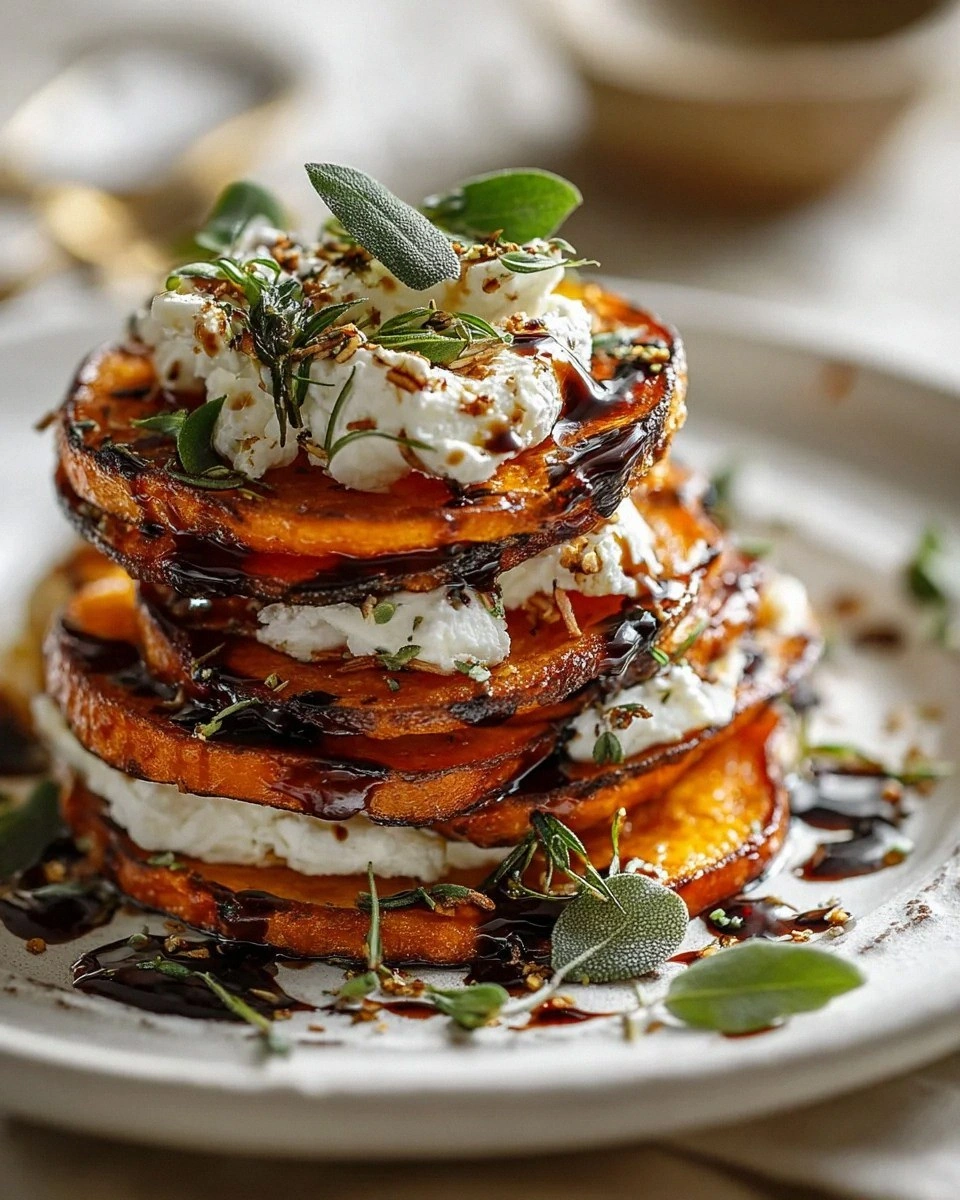
Picture this: I’m juggling three pans, a toddler is demanding a snack, and the smoke alarm decides to join the party just as I’m about to pull a tray of roasted veggies from the oven. In the chaos, I grabbed a sack of sweet potatoes, tossed them in olive oil, and whispered a quick prayer to the culinary gods. The result? A stack of golden‑brown sweet potato rounds that sang with smoky paprika, capped with a cloud of buttery burrata, and drizzled with a balsamic glaze that could make a grown adult weep with joy. I dared a friend to try one and not ask for a second serving, and guess what? He actually said “no” – a miracle in my kitchen.
The moment those sweet potato slices hit the hot sheet pan, the kitchen filled with a sweet‑earthy perfume that reminded me of autumn markets, even though it was a scorching July afternoon. The sizzle was crisp, like a tiny fireworks show on the countertop, and the air turned amber with the promise of caramelized edges. As the slices baked, their skins blistered into a delicate lace, while the interiors stayed buttery soft, creating a textural paradox that makes you want to shout, “Why haven’t I discovered this sooner?” The aroma curled around my nostrils, pulling me in like a magnetic force, and I could already taste the tang of the balsamic glaze dancing with the creamy burrata.
Most sweet potato recipes either drown the natural sweetness in a sea of syrup or forget to give the dish any real crunch. I’ve tried a dozen versions that left me with soggy, bland piles that looked like they belonged in a school cafeteria. This version, however, flips the script: it respects the vegetable’s inherent sweetness, amplifies it with smoky depth, and then crowns it with a luxurious cheese that melts just enough to ooze but not so much that it loses its shape. The secret? A quick flash‑roast at high heat, a precise dusting of smoked paprika, and a finishing drizzle of balsamic glaze that adds a bright, acidic snap—think of it as a fireworks finale for your palate.
And here’s the kicker: I’m going to reveal a tiny technique involving a parchment‑lined baking sheet that guarantees those perfect, crack‑le‑like edges without any sticking drama. Trust me, it’s a game‑changer that most recipes completely overlook. Let me walk you through every single step — by the end, you’ll wonder how you ever made it any other way.
What Makes This Version Stand Out
- Flavor Explosion: The sweet, earthy base of the potatoes is elevated by smoky paprika and a tangy balsamic glaze, creating a layered taste that keeps you reaching for more.
- Texture Symphony: Each stack offers a crisp, caramelized exterior that gives way to a melt‑in‑your‑mouth interior, topped with the creamy silk of burrata.
- Simplicity Meets Sophistication: With just eight ingredients, you get a dish that looks restaurant‑ready without the need for obscure pantry items.
- Unique Presentation: Mini stacks are bite‑size, perfect for parties, and they hold together beautifully, making them both a visual and gustatory delight.
- Crowd‑Pleaser Factor: Even the most skeptical meat‑eaters are converted after the first bite—trust me, I’ve seen it happen.
- Ingredient Quality: Using fresh thyme and high‑quality burrata adds an herbaceous lift and luxurious texture that cheap substitutes simply can’t match.
- Cooking Method Mastery: The high‑heat roast locks in moisture while creating those coveted caramelized edges—no deep‑frying required.
- Make‑Ahead Friendly: Assemble the stacks ahead of time, refrigerate, and finish with glaze and burrata right before serving for a stress‑free entertaining experience.
Inside the Ingredient List
The Flavor Base
Sweet Potatoes: The star of the dish! Their natural sweetness pairs beautifully with burrata and balsamic. Choose medium‑sized, firm potatoes with a deep orange flesh—look for ones that feel heavy for their size, indicating dense, creamy interiors. If you skip them, you lose the foundational sweet‑earthy flavor that makes the whole stack sing. A good swap is butternut squash, but you’ll sacrifice that subtle nutty undertone that sweet potatoes uniquely provide.
Olive Oil: Adds richness and helps achieve the perfect crispy texture when baked. Opt for extra‑virgin olive oil for its fruity notes; it will coat each slice evenly, ensuring the edges brown uniformly. Using a lower‑quality oil can lead to uneven browning and a greasy mouthfeel. If you’re watching calories, you can halve the amount, but expect a slight loss in crunch.
Garlic Powder: A sprinkle of this elevates the flavor, offering a hint of savory goodness without overwhelming the dish. It distributes evenly, unlike fresh garlic which can burn in the high heat of roasting. Skipping it leaves the stack a little flat; you could substitute with minced roasted garlic for a deeper aroma, but be careful not to over‑cook.
The Texture Crew
Mini Burrata Balls: These creamy delights crown each stack, providing a luscious texture that balances the dish perfectly. The outer mozzarella shell holds the milky interior, creating a surprise burst when you bite into it. If you can’t find mini burrata, use regular burrata and cut into 1‑inch pieces, but the visual appeal of the mini spheres will be missed.
Fresh Thyme Sprigs: Use these for a pop of color and a fresh herbaceous note that lifts the flavors. Strip the leaves just before serving for a fragrant finish. Dried thyme can be used in a pinch, but fresh thyme’s bright, piney aroma is essential for that final lift.
The Unexpected Star
Smoked Paprika: This brings a warm, earthy flavor that complements sweet potatoes’ sweetness wonderfully. Its smoky depth adds a subtle heat without the heat of chili, making it universally appealing. If you’re allergic to nightshades, try a pinch of smoked cumin, though the flavor profile will shift toward a more earthy tone.
Balsamic Glaze: The tangy drizzle takes the stacks to another level, adding a zing that wakes up your palate. Its syrupy consistency clings to the sweet potato, creating a glossy finish. Homemade glaze (reduce balsamic vinegar with a touch of honey) offers a richer flavor than store‑bought, but the latter works fine in a pinch.
The Final Flourish
Salt and Freshly Cracked Black Pepper: Essential for seasoning, they enhance all the flavors in the stacks. Use flaky sea salt for a delicate crunch and freshly cracked pepper for a bright bite. Over‑salting can mask the sweet potato’s natural sweetness, so season gradually and taste as you go.
Everything's prepped? Good. Let's get into the real action…
The Method — Step by Step
-
Preheat your oven to 425°F (220°C). While the oven warms up, line a large rimmed baking sheet with a piece of parchment, then place a second sheet of parchment on top. This double‑layer hack (yes, the one I mentioned earlier) ensures that the sweet potato rounds won’t cling, and you’ll get a perfectly even roast. The heat should feel like a gentle roar—steady and ready to caramelize.
-
Peel the sweet potatoes and slice them into uniform rounds about ½‑inch thick. Uniformity is key; if some slices are thicker, they’ll stay undercooked while the thinners burn. Toss the rounds in a large bowl with 2 tablespoons of olive oil, 1 teaspoon of garlic powder, 1 teaspoon of smoked paprika, and a generous pinch of salt and freshly cracked black pepper. The mixture should glisten, each slice coated like it’s been given a light massage.
Watch Out: Overcrowding the pan will steam the potatoes instead of roasting them. Give each slice its own space—think of a well‑spaced parking lot. -
Arrange the seasoned rounds in a single layer on the double parchment. Slide the sheet into the oven and roast for 12‑15 minutes, then flip each slice and roast another 10‑12 minutes until the edges are crisp and the centers are fork‑tender. You’ll know they’re done when the edges start pulling away from the parchment and a sweet, nutty aroma fills the kitchen.
-
While the potatoes finish, prepare the balsamic glaze if you’re making it from scratch. Combine ½ cup of balsamic vinegar with 1 tablespoon of honey in a small saucepan, bring to a gentle boil, then reduce the heat and simmer for 8‑10 minutes until thickened to a syrupy consistency. If you’re using store‑bought glaze, give it a quick stir to loosen any crystallized bits.
-
Remove the sweet potato rounds from the oven and let them cool for about 2 minutes. This brief pause allows the steam to escape, preventing the burrata from melting too quickly when you assemble the stacks. Meanwhile, pat the mini burrata balls dry with a paper towel to remove excess moisture.
Kitchen Hack: If your burrata balls are too large, gently press them between two sheets of parchment to shape them into uniform 1‑inch discs that sit neatly atop each stack. -
Now the fun part: start building the stacks. Take one sweet potato round as the base, add a second round on top, then place a mini burrata ball in the center, and finish with a third round. Press gently so the layers adhere, but don’t squash the cheese—let it sit like a crown. Repeat until you’ve assembled all the stacks.
-
Drizzle each stack with a thin ribbon of balsamic glaze—just enough to create a glossy sheen without drowning the delicate flavors. Sprinkle fresh thyme leaves over the top for a burst of color and herbaceous aroma. The glaze should pool slightly at the base, creating a visual contrast that’s as pleasing to the eye as it is to the palate.
-
Serve immediately on a platter, or keep them warm in a low oven (200°F) for up to 10 minutes if you’re timing them for a party. The burrata will stay soft, and the sweet potato edges will remain crisp. This is the moment of truth—watch your guests’ faces light up as they bite into that perfect combination of sweet, smoky, creamy, and tangy.
That sizzle when it hits the pan? Absolute perfection.
That's it — you did it. But hold on, I've got a few more tricks that'll take this to another level…
Insider Tricks for Flawless Results
The Temperature Rule Nobody Follows
Most home cooks set the oven to “medium” and wonder why their sweet potatoes turn out soggy. The secret is a hot, roaring 425°F (220°C) blast that sears the exterior instantly, locking in moisture. If you’re using a convection oven, you can drop the temperature by 25°F and still achieve the same caramelization. I once tried a lower temp to “be gentle,” and the result was a limp, sad stack that lacked any crunch.
Why Your Nose Knows Best
Before you even peek at the timer, trust your sense of smell. When the edges start to turn a deep amber and you catch that nutty, caramel scent, you’re golden. If the aroma is still sweet and raw, give them another minute. My kitchen timer is just a suggestion; your nose is the real master.
The 5‑Minute Rest That Changes Everything
After roasting, let the sweet potato rounds rest for exactly five minutes on a cooling rack. This short pause allows the interior steam to redistribute, preventing the burrata from melting too fast when you assemble. Skipping this step leads to a soggy bottom and a cheese that slides off the stack like a bad dance partner.
Thyme Timing Trick
Fresh thyme should be added at the very end, not during roasting. The delicate leaves lose their bright flavor when exposed to high heat for too long. I once tossed thyme in with the potatoes and ended up with a muted herb note. Now I keep the sprigs whole, sprinkle them right before serving, and the result is a pop of freshness that cuts through the richness.
Glaze Consistency Check
When reducing balsamic vinegar, keep a close eye on the consistency. It should coat the back of a spoon without dripping off instantly. Too thin, and it will pool and make the stack soggy; too thick, and it will harden into a brittle crust. A quick dip test—dip a spoon and watch the glaze cling—will save you from a culinary disaster.
Creative Twists and Variations
This recipe is a playground. Here are some of my favorite ways to switch things up:
Spicy Sriracha Drizzle
Swap half of the balsamic glaze for a thickened sriracha reduction. The heat adds a punch that pairs surprisingly well with the sweet potatoes, turning the dish into a bold appetizer for spice lovers.
Smoky Chipotle Mayo
Replace the burrata with a dollop of chipotle‑infused mayo and top with a sprinkle of cotija cheese. This gives the stack a smoky, creamy finish that’s perfect for a Mexican‑themed gathering.
Herb‑Infused Goat Cheese
Use herb‑marinated goat cheese instead of burrata for a tangier, crumbly contrast. The goat cheese’s acidity balances the sweet potato’s natural sugars in a delightful way.
Maple‑Glazed Pecans
Top each stack with a handful of toasted pecans glazed in maple syrup. The nutty crunch adds an extra layer of texture, making the bite even more complex.
Vegan Version
Swap the burrata for a cashew‑based vegan cheese and use a plant‑based olive oil spray. The flavor profile stays intact, and the dish becomes fully vegan without sacrificing creaminess.
Winter Warmth
For a cozy, wintery spin, add a pinch of ground cinnamon and a drizzle of honey over the finished stack. The sweet‑spice combo makes the dish feel like a warm hug on a cold night.
Storing and Bringing It Back to Life
Fridge Storage
Place the assembled stacks in an airtight container lined with parchment paper. They’ll keep fresh for up to three days. When you’re ready to serve, let them sit at room temperature for 10 minutes, then add fresh burrata and a quick drizzle of glaze to revive the textures.
Freezer Friendly
Freeze the roasted sweet potato rounds on a baking sheet before transferring them to a zip‑top bag. They’ll hold up for up to two months. Burrata should never be frozen—keep it fresh and add it after reheating the rounds.
Best Reheating Method
Preheat your oven to 350°F (175°C). Spread the rounds on a parchment‑lined tray, add a tiny splash of water (about a tablespoon) to create steam, and heat for 8‑10 minutes until warmed through and the edges crisp again. The water trick restores that coveted crunch without drying the potatoes.