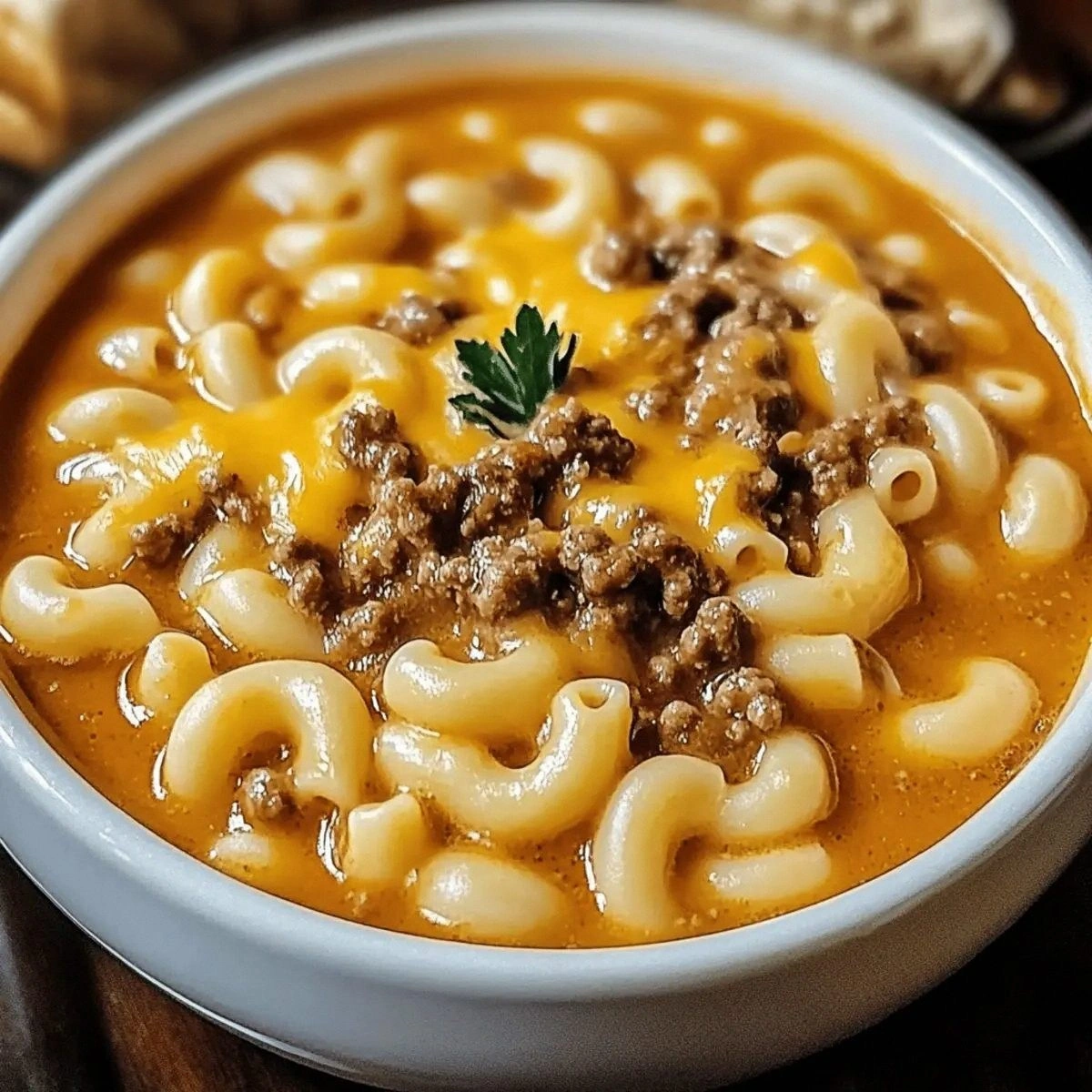
There I was, standing in my kitchen at 9:47 PM on a Tuesday, still wearing my work badge and clutching a half-eaten bag of stale tortilla chips. My stomach was staging a full-blown protest, my fridge looked like a crime scene, and I had exactly twenty-three minutes before my favorite show started. I needed something that tasted like a cheeseburger, felt like a hug, and required zero fancy footwork. Most people would have ordered takeout. I grabbed my Dutch oven and started throwing things together like a culinary mad scientist, praying the food gods would forgive my desperation.
What happened next defied every kitchen law I thought I knew. The ground beef hit the pan with that satisfying hiss that makes you feel like maybe, just maybe, you've got your life together. Onions followed, turning translucent and sweet while the beef developed those gorgeous caramelized edges that make you want to face-plant directly into the pot. Beef broth joined the party, elbow macaroni dove in like excited kids at a pool party, and suddenly my kitchen smelled like the world's best diner had set up shop in my apartment. That first spoonful? Pure, unfiltered magic. We're talking cheeseburger flavors wrapped in the coziest soup blanket you've ever tasted.
Here's the kicker: this isn't just another "dump everything in a pot" recipe that tastes like cafeteria mystery meat. This is the sophisticated, grown-up version of your favorite fast-food indulgence. The broth is rich and beefy, the pasta cooks directly in the flavorful liquid, and the cheese melts into this luxurious sauce that coats every noodle like velvet. The diced tomatoes add bright pops of acidity that cut through the richness, while the pickles bring that unmistakable burger joint tang. One pot, twenty minutes, zero dishes except the one you're eating from. I dare you to taste this and not go back for seconds.
I've made this soup seventeen times since that fateful Tuesday, tweaking and perfecting every element. My friends started requesting it by name. My neighbor begged for the recipe after smelling it through our shared wall. Even my mother, who believes soup should only be served in winter, demanded I teach her the method. Let me walk you through every single step — by the end, you'll wonder how you ever made it any other way.
What Makes This Version Stand Out
- Taste Explosion: This isn't some weak, watery soup pretending to be a cheeseburger. We're talking concentrated beef flavor that punches you in the taste buds, followed by waves of sharp cheddar that melt into every crevice. The combination of beef broth, caramelized onions, and real cheese creates a depth that most recipes completely miss.
- Texture Paradise: Most macaroni soups turn into mushy disasters, but elbow macaroni holds its shape beautifully while still getting that perfect al dente bite. The contrast between the tender beef, slightly firm pasta, and melty cheese creates a symphony of textures that keeps every spoonful interesting.
- One-Pot Wonder: Literally everything happens in a single pot. No straining, no transferring to baking dishes, no mountain of dirty pans. You brown, simmer, and melt all in the same vessel, which means every bit of flavor stays right where it belongs — in your soup.
- Weeknight Hero: From pantry to table in under thirty minutes, this recipe respects your busy schedule. While the pasta cooks, you're already shredding cheese and setting the table. It's faster than ordering delivery and infinitely more satisfying.
- Customizable Magic: The base recipe is perfect, but it welcomes creativity like a long-lost friend. Want it spicy? Add jalapeños. Prefer it loaded? Throw in some bacon. Craving that fast-food fix? A squirt of ketchup and mustard transforms it instantly.
- Leftover Gold: This soup actually tastes better the next day, unlike most pasta soups that congeal into sad, gluey messes. The flavors meld and deepen, the pasta somehow maintains integrity, and reheating takes exactly ninety seconds in the microwave.
Alright, let's break down exactly what goes into this masterpiece...
Inside the Ingredient List
The Flavor Foundation
Ground beef isn't just ground beef here — it's the entire backbone of our soup. I'm talking about good old 80/20 ground chuck, the kind with enough fat to keep things juicy but not so much that you're drinking grease soup. When you brown this properly, those fond bits that stick to the bottom of the pot? That's pure gold, my friend. The Maillard reaction creates hundreds of flavor compounds that you simply cannot fake with bouillon or seasoning packets. Skip the lean stuff — you need that fat to carry flavor and create the rich mouthfeel that makes this soup feel indulgent rather than diet-friendly.
The onion isn't just there for bulk — it's your secret weapon for sweetness and depth. As it cooks down with the beef, it releases natural sugars that caramelize and add complexity you can't get from any bottle. Dice it small so it melts into the background, becoming one with the broth rather than standing out like an awkward party guest. Yellow onions are perfect here; they're sweet when cooked but still have enough bite to keep things interesting. Vidalia or sweet onions would make the soup cloying, while red onions would turn everything purple and taste too sharp.
The Comfort Crew
Beef broth is where most recipes go tragically wrong, using watery canned stuff that tastes like someone waved a beef-scented candle over salt water. You want the good stuff — full-sodium, real beef broth that actually tastes like something. If you're using boxed broth, taste it first; if it makes you grimace, it's not going to magically improve in your soup. The broth carries all our flavors, so this is no place to cheap out. That said, if all you have is bouillon cubes, dissolve them in hot water and add a splash of soy sauce for depth.
Elbow macaroni isn't just nostalgic — it's scientifically perfect for this application. The curved shape creates little pockets where cheese and broth can hide, ensuring every bite has maximum flavor impact. The ridges on good quality elbows grab onto sauce like tiny edible spoons. Don't get seduced by fancy pasta shapes; they either take too long to cook or fall apart. Stick with the classic and you'll understand why it's been beloved for generations.
The Creamy Dream Team
Cheddar cheese is the star that gets top billing, but not all cheddars are created equal. Pre-shredded cheese is coated with cellulose that prevents smooth melting, leaving you with a grainy, separated mess. Buy a block and shred it yourself — your future self will thank you while eating perfectly smooth, glossy soup. Sharp cheddar gives you that tangy kick that screams cheeseburger, while mild would disappear into the background like a wallflower at prom. If you want to get fancy, replace half the cheddar with Gruyère for nuttiness, but honestly, the classic version is perfect.
Milk adds silkiness without heaviness, creating that luxurious texture that makes restaurant soups so much better than homemade versions. Whole milk is ideal — anything leaner and you lose richness, anything richer and the soup becomes too thick. The trick is adding it at the right temperature so it doesn't curdle. Room temperature milk stirred in off-heat creates the creamiest results without any weird protein clumps.
The Unexpected Stars
Diced tomatoes might seem out of place in a cheeseburger soup, but hear me out. They add bright acidity that cuts through all that richness, preventing palate fatigue that makes you unable to finish your bowl. The key is using petite diced tomatoes that distribute evenly, or better yet, dice fresh Roma tomatoes yourself. They should be added at the end so they stay distinct little bursts of freshness rather than dissolving into the broth. If tomatoes in cheeseburger soup offends your sensibilities, substitute with diced pickles for that authentic burger joint experience.
Pickles are the sleeper hit that takes this from "pretty good soup" to "holy cow, this tastes exactly like a Big Mac." Their vinegar tang and crisp texture add the perfect counterpoint to all that creamy, beefy richness. Dice them small so they distribute evenly, and add them at the very end so they stay crisp. Bread and butter pickles add sweetness, dill pickles bring herbaceous notes — use whatever makes your burger-loving heart sing.
Everything's prepped? Good. Let's get into the real action...
The Method — Step by Step
- Set your Dutch oven or heavy pot over medium-high heat and let it get properly hot — we're talking about two to three minutes. You want it hot enough that when you add the ground beef, it immediately starts sizzling rather than just sitting there sweating pathetically. Add the beef in one even layer and resist every urge to stir for the first minute. Let it develop that gorgeous brown crust that carries about eighty percent of our flavor. Break it up with your wooden spoon, but leave some nice chunky pieces rather than turning it into beef dust.
- While the beef is browning, dice your onion — and don't you dare use a food processor unless you want onion mush. Keep your knife work consistent so everything cooks evenly. When the beef is about halfway browned, push it to the edges of the pot and add the onions to the center where all those beautiful beef drippings are waiting. The onions will pick up all that fond and turn translucent and sweet. This is the foundation of flavor that separates good soup from restaurant-quality soup.
- Season aggressively with salt and pepper — this is your only chance to season the beef and onions properly. Keep tasting as you go; under-seasoned soup is a tragedy that no amount of cheese can fix. The beef should be deeply browned but not burned, the onions should be soft and sweet. This whole process takes about eight to ten minutes, and it's worth every second. Don't rush it or you'll end up with gray, sad beef water instead of rich, beefy goodness.
- Pour in your beef broth and crank the heat to high. You want it at a rolling boil before the pasta even thinks about going in. This prevents the pasta from releasing too much starch and turning your soup into glue. Use your wooden spoon to scrape up every bit of those beautiful brown bits stuck to the bottom — they're packed with umami flavor that makes the difference between homemade and restaurant quality. The broth should immediately turn a rich, deep brown color.
- Add the elbow macaroni and stir immediately to prevent sticking. Set your timer for exactly two minutes less than the package directions for al dente. The pasta will continue cooking in the hot broth even after you turn off the heat, so pulling it early is crucial. Stir every minute or so to keep things moving — stuck pasta is sad pasta. You should see the broth thickening slightly as the pasta releases starch, creating that perfect soup consistency.
- Lower the heat to medium and add the milk — but here's the crucial part: add it slowly while stirring constantly. Adding cold milk to hot liquid can cause curdling, which gives you grainy, separated soup. Room temperature milk stirred in gradually creates the creamiest texture. The soup should immediately lighten in color and become silky smooth. If it looks like it's starting to curdle, remove from heat immediately and whisk vigorously — you can usually save it.
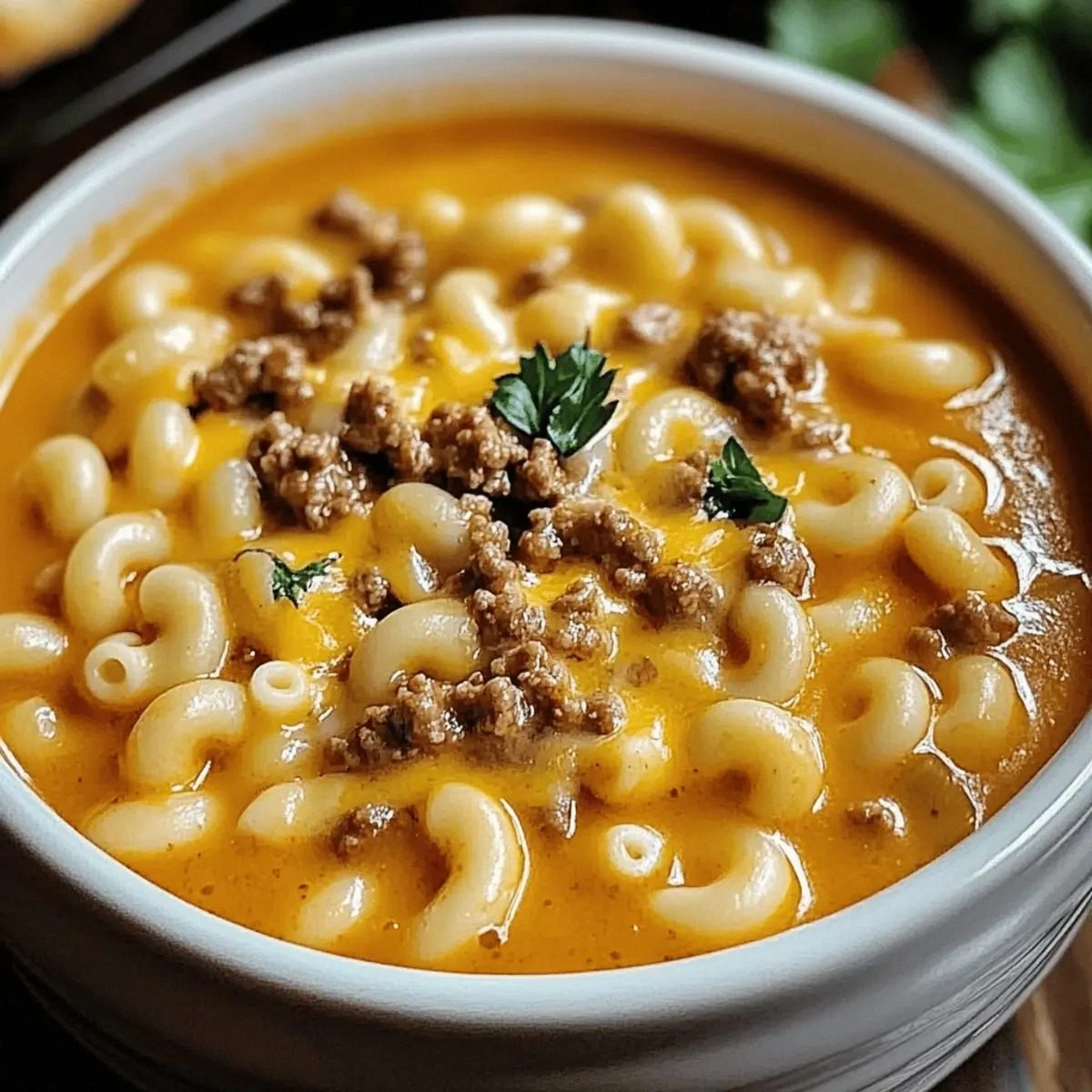
- Now comes the moment of truth: the cheese. Remove the pot from heat entirely — this is non-negotiable. Hot liquid plus cheese equals clumpy disaster. Add the shredded cheese in three batches, stirring each addition until completely melted before adding the next. The soup should transform from a thin broth to a luxurious, cheese-coated masterpiece. If it seems too thick, add a splash more broth. Too thin? Let it sit for two minutes — it will thicken as the cheese fully incorporates.
- Taste and adjust seasoning — this is where you decide if you're team tomato or team pickle. Add your chosen acid component and stir gently to distribute. The soup should taste like the best cheeseburger you've ever had, but in spoonable form. If it needs more tang, add a splash of pickle juice. More richness? A pat of butter stirred in at the end makes it restaurant-level decadent. Serve immediately in deep bowls with extra cheese on top.
That's it — you did it. But hold on, I've got a few more tricks that'll take this to another level...
Insider Tricks for Flawless Results
The Temperature Rule Nobody Follows
Here's where most home cooks mess up: they treat temperature like a suggestion rather than a commandment. When I say "remove from heat before adding cheese," I'm not being precious — I'm saving you from a broken, grainy disaster. Cheese melts between 130-180°F, but it breaks apart above 180°F. That means your soup needs to be hot enough to melt but cool enough to keep the proteins from seizing up. Think of it like a first date: warm and inviting, not scorching hot and overwhelming.
Use an instant-read thermometer if you're nervous — pull the soup when it hits 170°F, then add cheese off-heat. The residual warmth will melt everything perfectly while keeping the texture smooth as silk. This is the difference between soup that looks like it came from a can versus soup that looks like it came from a steakhouse. A friend tried skipping this step once — let's just say it didn't end well, and her kids still call it "the chunky cheese incident."
Why Your Nose Knows Best
Trust your sense of smell more than any timer. When the beef is properly browned, your kitchen should smell like the best burger joint in town — rich, meaty, slightly sweet from the caramelization. If it smells flat or metallic, keep cooking. The onions are ready when they smell sweet and buttery, not sharp and sulfurous. This might sound like new-age nonsense, but your nose processes thousands more scent compounds than your taste buds can detect.
Same goes for seasoning — the soup should smell balanced, not like any one ingredient is shouting over the others. If you catch a whiff of raw onion or harsh garlic, keep cooking. When it smells like something you'd pay fourteen dollars for in a restaurant, you're there. This is why professional chefs can cook without recipes — they've trained their noses to know when something's perfect.
The 5-Minute Rest That Changes Everything
After you've stirred in the cheese and everything looks gorgeous, walk away. Seriously. Set a timer for five minutes and let the soup rest off-heat. During this time, magic happens: the cheese fully incorporates, the pasta absorbs just enough broth to become perfectly tender, and the flavors meld into something greater than the sum of their parts. It's like letting a good wine breathe, except instead of wine, you've got liquid cheeseburger gold.
This rest also lets the temperature drop to the perfect eating range — nobody wants to burn their mouth on molten cheese soup. The soup will thicken slightly as it cools, achieving that perfect consistency that coats your spoon without being gloppy. Use this time to set the table, shred extra cheese for garnish, or just stand there inhaling the incredible aroma. Patience is a virtue, especially when it comes to cheese-based soups.
Creative Twists and Variations
This recipe is a playground. Here are some of my favorite ways to switch things up:
Bacon Cheeseburger Explosion
Cook four strips of bacon until crispy before starting the beef. Remove the bacon, crumble it, and use the rendered fat to brown your ground beef. The smoky depth this adds is absolutely insane — it's like someone took your favorite burger and made it into liquid form. Add the crumbled bacon at the very end so it stays crisp. If you've ever struggled with getting that authentic burger joint flavor, you're not alone — and I've got the fix right here.
Spicy Southwest Version
Add a diced jalapeño with the onions, swap the cheddar for pepper jack, and stir in a teaspoon of chipotle powder. The heat builds slowly, warming you from the inside out without overwhelming the cheeseburger essence. Top with crushed tortilla chips for crunch and a dollop of sour cream to cool things down. Picture yourself pulling this out of the pot, the whole kitchen smelling like the best Tex-Mex burger you've ever had.
Mushroom Swiss Masterpiece
Sauté eight ounces of sliced mushrooms with the onions until they're golden and concentrated. Swap the cheddar for Swiss cheese and add a splash of white wine with the broth. The earthy mushrooms and nutty Swiss create a sophisticated version that tastes like it came from a French bistro. Okay, ready for the game-changer? A teaspoon of Worcestershire sauce at the end ties everything together.
Breakfast Burger Soup
Add a handful of frozen hash browns with the pasta, crack an egg into the hot soup during the last two minutes, and top with everything bagel seasoning. The egg poaches gently in the hot broth, creating silky ribbons that make this feel like breakfast and dinner had a delicious baby. This next part? Pure magic — a drizzle of maple syrup at the end creates that sweet-savory balance that makes breakfast burgers so addictive.
Lightened-Up Version
Use lean ground turkey, skim milk, and reduced-fat cheese — but don't tell anyone I suggested this. The trick is adding extra seasoning to compensate for the flavor loss. Stir in a cup of cauliflower rice with the pasta for bulk without calories. It's shockingly good for a "healthy" version, proving that sometimes you can have your cheeseburger and eat it too.
Loaded Baked Potato Style
Replace half the pasta with diced potatoes, add crispy bacon, green onions, and a dollop of sour cream. The potatoes break down slightly, thickening the soup naturally while adding that loaded baked potato vibe. Stay with me here — this is worth it even if it sounds weird. The combination of potato and pasta creates the most comforting texture imaginable.
Storing and Bringing It Back to Life
Fridge Storage
Let the soup cool completely before transferring to airtight containers — hot soup in the fridge creates condensation that leads to watery leftovers and potential food safety issues. Store in shallow containers so it cools quickly and evenly. Properly stored, this keeps for up to four days, though honestly, it's never lasted more than two in my house. The flavors actually intensify overnight, making leftovers something to celebrate rather than tolerate.
When storing, place a piece of plastic wrap directly on the surface of the soup before sealing the container. This prevents a skin from forming and keeps the cheese from drying out. If the soup thickens too much in the fridge, that's normal — just add a splash of broth or milk when reheating. Add a tiny splash of water before reheating — it steams back to perfection without diluting the flavor.
Freezer Friendly
Here's where things get tricky: dairy-based soups can separate when frozen, and pasta can get mushy. But I've cracked the code! Freeze the soup without the cheese and pasta, then add fresh ones when reheating. Portion into freezer bags, squeeze out all the air, and freeze flat for easy stacking. It keeps for up to three months this way, ready to rescue you from dinner emergencies.
To reheat, thaw overnight in the fridge, bring to a simmer, then add fresh pasta and cheese following the original method. If you must freeze the complete soup, reheat it very gently over low heat, whisking constantly to bring everything back together. It won't be quite as perfect as fresh, but it's still miles better than most convenience foods.
Best Reheating Method
Low and slow is the name of the game here. Microwave on 50% power in one-minute intervals, stirring between each burst. On the stovetop, use low heat and stir frequently to prevent scorching. If the soup has separated, whisk vigorously while reheating — usually it comes back together beautifully. Add a splash of broth if it's too thick, but resist the urge to add water which dilutes flavor.
For the best texture, reheat only what you'll eat — repeated reheating breaks down the pasta and can make the cheese grainy. If you're feeding a crowd, reheat the whole batch gently, but don't let it boil. That gentle steam rising from the pot? Absolute perfection, and proof that good things come to those who wait.